Online Divorce Mediation: How It Works in 2026
Written and reviewed by the divvi team. How we research and check this.

Online divorce mediation lets couples resolve their divorce through a neutral, certified mediator using secure video conferencing, shared documents, and digital signatures, all without stepping into a courtroom. The process typically moves faster than litigation, costs far less, and keeps your personal matters out of public court records. A mediator guides both parties through negotiating asset division, custody, support, and parenting plans, then prepares documents designed for filing once both sides reach agreement. Sessions happen from home, on your schedule, including evenings and weekends. Here is what the full process looks like:
- Schedule a consultation with a certified mediator to review your situation
- Attend mediation sessions via secure video conference, with live document sharing
- Negotiate terms on key issues with the mediator facilitating discussion
- Review and sign the drafted agreement using digital signatures
- File electronically once both parties approve, producing a decree designed for filing
Mediated agreements are legally enforceable once a judge approves them, carrying the same weight as any court order. Confidentiality is built into the process: everything discussed stays private, unlike court proceedings that become public record.
Who can use online divorce mediation services?
Virtual mediation works best for couples who are willing to communicate, even if they disagree on specifics. You do not need a perfectly amicable split to qualify. Moderately contested divorces, where both people want a resolution but cannot agree on every detail, are well within reach. Online mediation is less suited for high-conflict cases or situations involving domestic violence, where a power imbalance makes neutral negotiation unsafe.
Eligibility generally comes down to a few practical factors:
- Willingness to participate in good faith, even with disagreements
- Reliable internet access and a device with a working webcam and microphone
- Compatible software such as Zoom, Google Meet, or a mediator's proprietary portal
- Manageable conflict level, without active restraining orders or safety concerns
- Geographic flexibility, since one or both spouses may live in different states or cities
Couples with children, shared property, or retirement accounts can still mediate online. The presence of complex assets does not automatically disqualify you; it just means sessions may take longer and require more financial documentation upfront.
What are the real benefits and limitations of virtual mediation?
The cost difference between mediation and litigation is stark. Contested divorces handled in court typically cost $15,000 to $26,000 or more, while mediation resolves the same issues for a fraction of that. Beyond money, the time savings matter: court cases routinely drag past a year, while mediation can wrap up in weeks.
Benefits worth knowing:
- Cost savings compared to hiring two opposing attorneys through full litigation
- Flexible scheduling, including evening and weekend appointments that fit around work and childcare
- Privacy, since mediated discussions are confidential and never enter public records
- Reduced conflict, because a neutral mediator keeps negotiations focused and productive
- Speed, with many cases reaching agreement in under 30 days
Limitations to factor in:
- Technology issues like poor internet or audio problems can interrupt sessions
- Non-verbal cues are harder to read on video, which can affect communication
- High-conflict cases may need in-person intervention or court involvement
- Complex financial situations sometimes require forensic accountants or attorneys alongside the mediator
- Agreement durability depends heavily on both parties being honest about assets and debts
Confidentiality in online sessions is protected through secure portals and private video rooms. Nothing shared in mediation can be used against either party in court unless legally required.
What issues does divorce mediation typically resolve?

Most of the core decisions in a divorce can be negotiated through mediation. Mediators tailor each session to the couple's specific circumstances, so the agenda shifts based on what matters most to each family. State-specific documentation for filings can be prepared during the process, which cuts down on delays after agreement is reached.
Common topics covered in sessions include:
- Asset and debt division, including real estate, vehicles, bank accounts, and retirement funds
- Child custody arrangements, covering both legal and physical custody
- Visitation schedules and holiday parenting plans
- Child support calculations based on state guidelines
- Spousal support, including amount, duration, and conditions for modification
The mediator does not make decisions for you. Their job is to help both parties communicate clearly, identify priorities, and find workable solutions. Once terms are agreed upon, the mediator drafts the settlement documents for both parties to review and sign.
How do you start the process and find a qualified mediator?
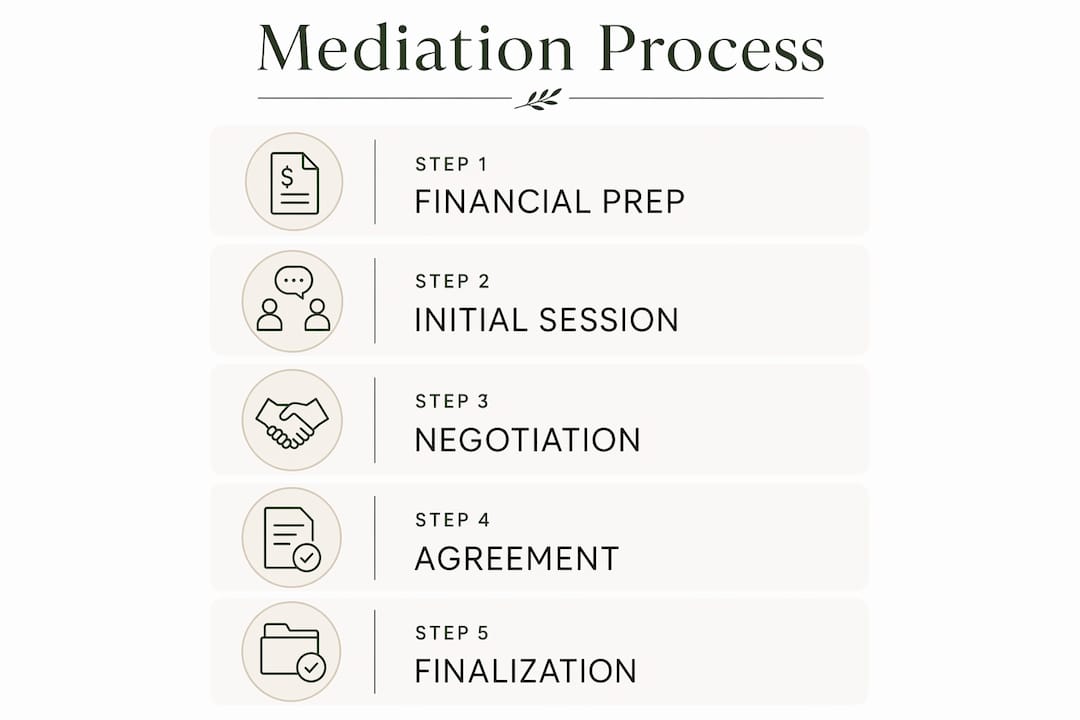
Starting is straightforward. Most mediators offer a free initial consultation where you can ask questions, describe your situation, and decide whether mediation fits your needs. After that, the process follows a clear path.
Steps to get started:
- Book a consultation to assess fit and discuss your case
- Verify credentials, including certification and experience with your state's divorce laws
- Confirm the mediator's platform supports secure video, document sharing, and e-signatures
- Gather financial documents before your first session: bank statements, tax returns, property records, and debt summaries
- Schedule sessions at times that work for both parties
Financial transparency before sessions begin is one of the biggest factors in how quickly mediation moves. Couples who arrive with organized records spend less time in session and reach cleaner agreements. If you are navigating a contested divorce in Utah, Divvi connects you with certified mediators alongside guided document preparation, so you are not piecing together the process from scratch.
For situations where you want legal guidance alongside mediation, working with a family law attorney before or during the process can help you understand your rights without turning the process adversarial.
Why certified mediators with state law expertise matter
Choosing a mediator who holds recognized credentials and knows your state's divorce statutes is not a formality. It directly affects whether your agreement holds up in court. Certified Family Law Specialists combine mediation skills with deep knowledge of divorce law, which reduces errors in drafted agreements and lowers the chance of a judge rejecting the settlement.
A mediator unfamiliar with your state's property division rules or child support calculation formulas can produce an agreement that looks complete but fails at the filing stage. That means more time, more cost, and more stress for both parties.
Pro Tip: Before hiring any mediator, ask directly: Are you certified in family law mediation? Do you have experience with state-specific divorce filings in my state? A qualified mediator will answer both questions without hesitation.
Key Takeaways
Online divorce mediation resolves most divorce issues remotely through a certified mediator, typically faster and at far lower cost than contested litigation.
| Point | Details |
|---|---|
| Cost advantage | Contested court divorces average $15,000–$26,000; mediation resolves the same issues for a fraction of that cost. |
| Who qualifies | Couples with manageable conflict, reliable internet, and willingness to negotiate in good faith. |
| Issues covered | Asset division, child custody, visitation, child support, and spousal support are all addressable. |
| Credentials matter | Certified mediators with state-specific expertise produce agreements less likely to fail at filing. |
| Preparation speeds results | Organizing financial documents before sessions reduces session time and produces cleaner agreements. |
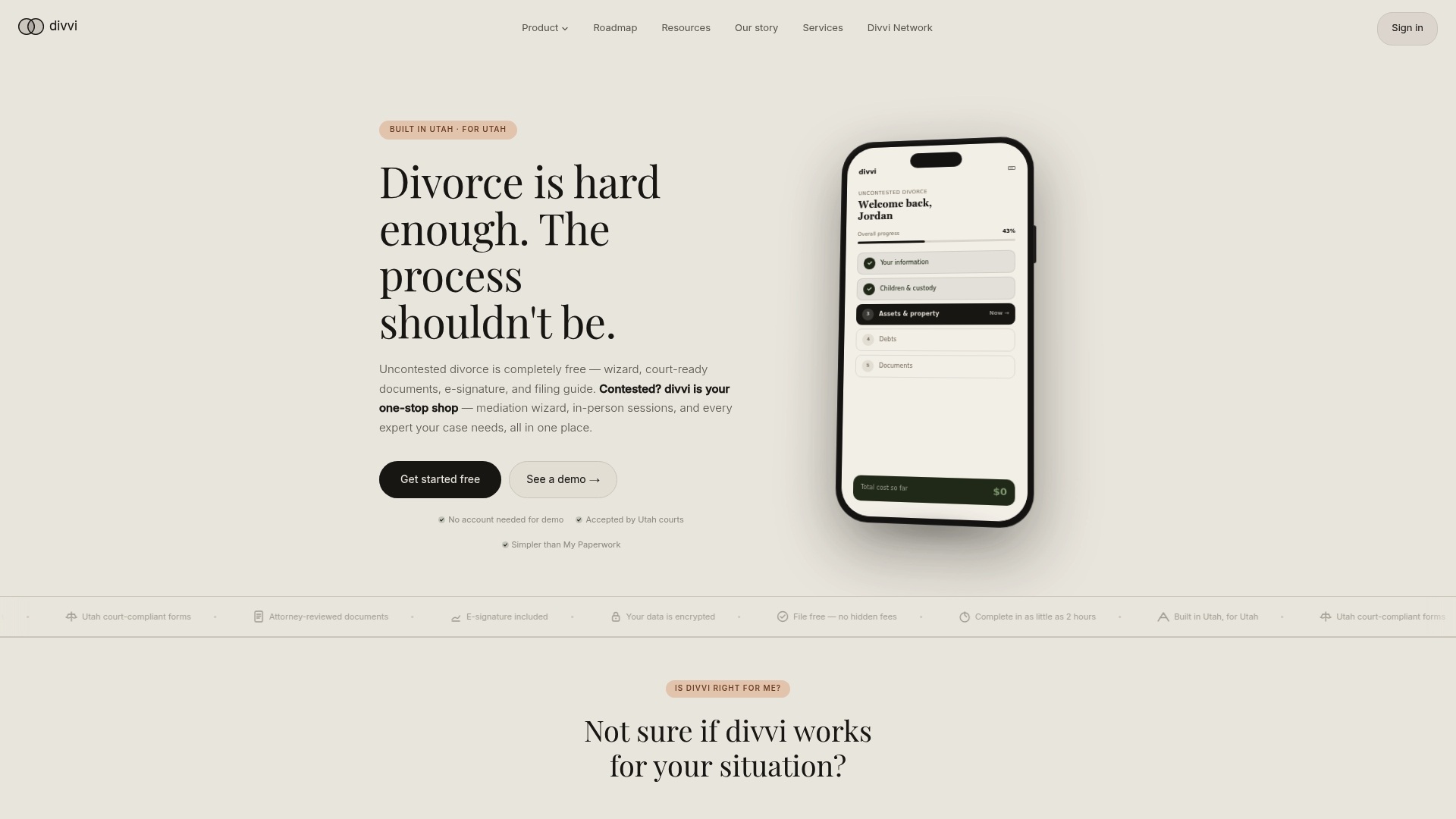
Divvi gives Utah couples a single place to handle every step of their divorce, from free uncontested document preparation to certified mediation services and links to Utah legal resources. Whether your case is straightforward or contested, you only pay for what you actually need. Start with the divorce platform and see how far you can get today.