Supervised Visitation in Utah: How Courts Order It
Written and reviewed by the divvi team. How we research and check this.
In Utah, "supervised visitation" is the court-ordered arrangement formally called supervised parent-time under Utah Code § 81-9-207, and your first three moves matter more than almost anything else: preserve every piece of evidence right now (texts, photos, incident dates), expect a mandatory referral to the Utah Courts' Co-Parenting Mediation Program before a judge rules, and get your paperwork in order before your first hearing.
Parent-time is Utah's statutory term for what most people call the custody schedule or visitation schedule; the words mean the same thing.
What to bring to mediation or your first court appearance:
- A written timeline of specific incidents with dates, locations, and witnesses
- Copies of police reports, protective orders, or medical records
- Screenshots or printed texts showing safety concerns (organized chronologically)
- Names and contact information for proposed supervisors or visitation centers
- Any prior court orders related to custody or parent-time
- Documentation of your own stability: employment, housing, treatment completion if relevant
The statute has been renumbered in some references to Title 81, § 81-9-207, but the controlling rules are the same. If your case is contested or involves domestic violence, consulting an attorney before filing is worth the cost. For parents who need help preparing documents designed for filing without paying full attorney rates, a platform like Divvi can walk you through the paperwork step by step.
Key Takeaways
Utah courts order supervised parent-time only when documented evidence shows a child faces unacceptable risk during unsupervised visits, and the process from petition to modification follows a clear, statute-driven sequence under Utah Code § 81-9-207.
| Point | Details |
|---|---|
| Supervision is the exception | Utah law defaults to unsupervised parent-time; courts require specific evidence of harm to order supervision. |
| Evidence specificity wins cases | Police reports, dated incident timelines, and professional letters carry far more weight than general allegations. |
| Mediation is mandatory | The Utah Courts' Co-Parenting Mediation Program charges a reduced rate and must be completed before most contested hearings. |
| Supervision is designed to end | Courts build in review dates; documented treatment completion and positive visit reports are the path to less-restrictive parent-time. |
| Divvi simplifies the paperwork | Utah parents can prepare petitions, temporary orders, and modification filings through Divvi's free document wizard with attorney referrals and mediation matching. |
Table of Contents
- What does supervised parent-time mean under Utah law?
- When do Utah courts order supervised parent-time?
- Key Utah legal standards that shape supervised parent-time orders
- Who can supervise visits, and where do they typically happen?
- How to ask the court for supervised parent-time in Utah
- What to expect from Utah's Co-Parenting Mediation Program
- How supervised parent-time is reviewed, modified, or ended
- Costs, visitation centers, and how to find a supervisor in Utah
- Practical tips for parents and caregivers during supervised visits
- What supervised parent-time actually feels like for parents
- Divvi can help Utah parents prepare paperwork and navigate mediation
- Sources
What does supervised parent-time mean under Utah law?
Utah law presumes that children benefit from regular, meaningful contact with both parents. Unsupervised parent-time is the default. Supervised parent-time is the exception, ordered only when evidence shows a child would face physical or emotional harm if visits happened without oversight.
The statute uses the term supervised parent-time, not "supervised visitation," though you will hear both phrases used interchangeably in courtrooms, legal guides, and visitation centers. You may also see "monitored visitation" or "supervised access" in older orders or out-of-state documents. They all describe the same arrangement: a third party is present during visits to protect the child.
A simple example: a parent with a recent DUI conviction and a history of alcohol-related incidents might be ordered to have supervised parent-time at a visitation center until they complete a substance abuse program and demonstrate sobriety. The supervision is not permanent punishment. Utah law treats it as a corrective, temporary measure with a built-in expectation of review.
When do Utah courts order supervised parent-time?
Courts do not order supervision lightly, and allegations alone rarely move a judge. What courts look for is a documented pattern or a specific, serious incident that creates an identifiable risk to the child. Common triggers include:
- Domestic violence: A history of violence in the home signals direct danger to the child, even when the child was not the direct target.
- Child abuse or neglect: Substantiated findings from DCFS or documented injuries shift the burden significantly.
- Substance abuse: Active addiction or recent relapse, especially when the parent has care of the child during impaired episodes.
- Untreated mental illness: A diagnosis alone is not enough. Courts look for evidence that the condition creates unpredictable or dangerous behavior during parent-time.
- Abduction risk: Prior attempts to remove the child from Utah, or credible threats to do so, can trigger supervised exchanges or full supervision.
- Severe boundary violations: Repeatedly coaching the child against the other parent, violating no-contact orders, or exposing the child to inappropriate situations.
- Persistent noncompliance: A pattern of ignoring court orders related to parent-time, not a single missed exchange.
The judge is asking one question: would this child be at unacceptable risk if visits happened without a supervisor present? Your evidence needs to answer that question specifically, not generally.
Key Utah legal standards that shape supervised parent-time orders
Three legal standards drive every supervised parent-time decision in Utah.
The best-interest standard is the foundation of all custody and parent-time decisions. Judges weigh the child's physical safety, emotional health, relationship with each parent, and stability. Supervision is justified when it serves the child's best interest, not as a punitive measure against a parent.
The safety threshold under Utah Code § 81-9-207 requires the court to find that unsupervised parent-time would expose the child to physical or emotional harm. Vague concern is not enough. The court needs specific, documented evidence.
The less-restrictive-alternatives requirement means a judge must consider whether something short of full supervision could adequately protect the child. Graduated parent-time, neutral exchange locations, or a no-overnight restriction might satisfy the court's safety concerns without requiring a supervisor at every visit.
Evidence that actually moves judges:
- Police reports and protective orders with specific dates and case numbers
- DCFS investigation findings or child welfare records
- Medical records documenting injuries or treatment
- School records showing behavioral changes tied to parent-time
- Substance abuse testing results or treatment records
- Therapist or counselor letters addressing the child's wellbeing
- Witness statements from teachers, neighbors, or family members
- A detailed, chronological incident timeline you prepared yourself
Specificity is what separates a persuasive filing from a dismissed one. A judge reviewing dozens of cases needs dates, documents, and a clear narrative, not a general description of a bad relationship. A well-organized divorce discovery checklist can help you identify and organize the right documents before you file.
Who can supervise visits, and where do they typically happen?
Utah Code § 81-9-207 requires court approval of any proposed supervisor. The court evaluates whether that person is willing, capable, and free of conflicts of interest, and specifically whether they can protect the child from physical or emotional harm. That last point matters more than most parents expect.
Nonprofessional supervisors (family or friends)
A grandparent, aunt, or trusted family friend can serve as a supervisor if the court approves them. The advantages are cost (often free) and the child's comfort with a familiar face. The drawbacks are real: family members may struggle to stay neutral, may not document visits properly, and may hesitate to end a visit if something goes wrong. Courts in higher-risk cases often decline nonprofessional supervisors for exactly these reasons.

Professional supervisors and visitation centers
Trained private supervisors and dedicated visitation centers offer neutrality, written documentation of every visit, and the authority to end a session if needed. The Family Support Center in Cedar City, for example, provides scheduled, documented, fee-based supervised family time in a controlled environment. Centers like this give courts a reliable paper trail and remove the awkwardness of asking a relative to police a parent.
Common visit settings:
- Visitation center (structured, documented, neutral)
- Community visits supervised by a professional (park, restaurant, library)
- Therapeutic supervision with a licensed therapist present
- Neutral exchange locations for drop-off and pick-up only
Practice-focused guidance consistently recommends that strong orders name the supervisor specifically, define the supervisor's authority to end a visit, set rules about what topics are off-limits during visits, and allocate who pays. Vague orders about "a mutually agreed supervisor" almost always generate follow-up disputes.
How to ask the court for supervised parent-time in Utah
Filing for supervised parent-time follows a clear sequence. Skipping steps or filing incomplete paperwork delays protection for the child and weakens your credibility with the judge.
- File in the correct district court. Parent-time matters are filed in the Utah district court for the county where the child lives. If a divorce or custody case is already open, you file a motion in that existing case. If no case exists, you file a new petition.
- Choose the right pleading. In an existing case, file a Motion to Modify Parent-Time or a Motion for Temporary Orders if the situation is urgent. In a new case, file a Petition to Establish Custody and Parent-Time. Utah Courts provides forms at utcourts.gov.
- Pay the filing fee or request a fee waiver. Filing fees vary by county and case type. If cost is a barrier, ask the clerk for a fee waiver application (Form 1F-021).
- Attach your supporting documents. Your motion needs a concise incident timeline, copies of police reports or protective orders, medical or school records, and a list of proposed supervisors or visitation centers with their contact information.
- Request temporary orders if the risk is immediate. A motion for temporary supervised parent-time can be heard quickly. For imminent danger, a protective order under Utah Code § 78B-7 may be appropriate and can include parent-time restrictions.
- Expect a mediation referral. Utah courts refer most parent-time disputes to the Co-Parenting Mediation Program before scheduling a contested hearing. Prepare for mediation as seriously as you would prepare for court.
- Prepare your courtroom presentation. Organize your evidence in a binder with tabs. Know your timeline cold. Be specific, calm, and focused on the child's safety, not on your grievances about the other parent.
Before mediation or a hearing, also:
- Preserve all electronic records (do not delete texts, emails, or voicemails)
- Notify the court if you have an attorney or are using a document service like Divvi
- Review temporary custody order guidance so you understand what a temporary order can and cannot do
If you are a victim of domestic violence, Womenslaw offers plain-language guidance on whether starting a court case is the right move for your specific safety situation.
What to expect from Utah's Co-Parenting Mediation Program
The Utah Courts' Co-Parenting Mediation Program is not optional once a court refers your case. It is a mandatory, structured process designed to resolve parent-time disputes before they consume a full contested hearing.
Program basics:
- Sessions typically run two to three hours
- The reduced rate is about $50 per hour per party, with income-based reductions available
- Each party may bring one support person under the Uniform Mediation Act
- Mediation is confidential; what is said in the session cannot be used as evidence in court
- The mediator does not decide the case. They facilitate. The judge decides if no agreement is reached.
Safety screening: Cases involving domestic violence or active protective orders go through a safety screening before mediation proceeds. The program may recommend professional supervision, separate sessions, or referral to other resources if mediation itself poses a risk to a party.
Mediator access: The program maintains a closed roster of experienced mediators. When a case is referred through the court program, the court assigns a mediator. If you want private mediation with a roster mediator outside the court program, you can contact them directly through the roster listing. Do not contact a court-assigned mediator directly before the scheduled session.
What mediation can accomplish in a supervised parent-time case: Parties can agree on a specific supervisor, a visitation center, a schedule, cost allocation, and a review date. A mediated agreement on these details is often more durable than a litigated order because both parties had a hand in writing it.
How supervised parent-time is reviewed, modified, or ended
Utah law treats supervised parent-time as temporary by design. Courts build in review dates, and the expectation is that a parent who addresses the underlying safety concern will eventually move toward less-restrictive parent-time.
- Complete the conditions the order sets. If the order requires substance abuse treatment, complete it and get a letter from your provider. If it requires a parenting class, finish it and keep the certificate.
- Accumulate documented visit reports. Consistent, positive supervised visits create a paper trail that supports modification. Ask your supervisor or visitation center for written reports after each session.
- Get supporting letters from professionals. Therapists, counselors, substance abuse treatment providers, and employers can all write letters addressing your progress and stability.
- File a Motion to Modify. When you have enough documented evidence of progress, file a motion in the same court that issued the original order. Attach your evidence: treatment completion records, clean testing results, visit reports, and professional letters.
- Request a review hearing. Some orders include a scheduled review date. If yours does not, your motion triggers a hearing. Be prepared to present your evidence and, if possible, have a professional witness testify.
Practice-oriented guidance notes that orders written with specific review mechanisms are far easier to modify than open-ended ones. If your original order lacks a review date, ask the court to include one when the order is entered. Courts generally respond well to parents who demonstrate consistent compliance over time, not just a single clean test or one good visit.
Costs, visitation centers, and how to find a supervisor in Utah
Professional supervised parent-time is not free, and courts are supposed to consider cost when structuring orders. That said, the court's primary obligation is the child's safety, so cost alone rarely overrides a supervision requirement.
Typical cost ranges:
- Visitation centers: fees vary by provider and location; many charge per session or per hour, and some require a registration or intake fee
- Private professional supervisors: hourly rates vary; sessions often have a minimum duration requirement
- Nonprofessional supervisors (family/friend): typically no direct cost, but courts may require background checks or training
The Family Support Center in Cedar City offers a documented, neutral, fee-based supervised family time service with scheduled visits. For parents in other parts of Utah, similar providers operate in Salt Lake City, Provo, Ogden, and St. George, though availability and fees differ.
How to find a provider:
- Search "supervised visitation center [your county] Utah" and "supervised family time Utah"
- Ask the court clerk or your mediator for a referral list
- Contact your local Utah Courts self-help center
- Ask the Co-Parenting Mediation Program mediator during your session
Questions to ask any provider before committing:
- Do you provide written visit reports after each session?
- What is your policy for ending a visit early?
- Do you conduct background checks on staff?
- What are your fees, and do you offer sliding-scale rates?
- Are you familiar with Utah court requirements for supervised parent-time?
For parents concerned about overall case costs, Divvi's divorce cost estimator can help you map out likely expenses across different case tracks before you file.
Practical tips for parents and caregivers during supervised visits
How you behave during supervised visits is evidence. Supervisors write reports. Judges read them.
Before each visit:
- Bring age-appropriate activities or comfort items for the child (books, a favorite toy, a simple craft)
- Arrive on time, sober, and calm. A single late arrival or visible agitation gets noted.
- Review any specific rules in your order about topics, photography, or recording
During the visit:
- Follow the supervisor's directions without argument. Disputing a supervisor's call during a visit is one of the fastest ways to end a session and generate a negative report.
- Keep conversation child-focused. Do not discuss the other parent, the court case, or legal strategy in front of the child.
- Do not attempt to record the visit unless your order explicitly permits it.
After the visit:
- Keep your own log: date, duration, what you did, how the child responded, and the supervisor's name
- Request a copy of the supervisor's written report when available
- If something concerning happened during the visit, report it to your attorney or document it in writing the same day
What not to do:
- Do not arrive impaired or attempt to test substances before a scheduled test
- Do not coach the child before or after visits
- Do not ask the supervisor to pass messages to the other parent
Pro Tip: Bring a structured activity plan to each visit. A simple outline showing what you intend to do with the child (read a book, work on a puzzle, play a game) signals intentional, child-focused parenting and gives the supervisor something positive to document.
What supervised parent-time actually feels like for parents
Most parents who receive a supervised parent-time order describe the initial reaction the same way: shock, then anger, then a grinding logistical reality. Scheduling around a center's hours, paying per session, and having a stranger in the room while you try to connect with your child is genuinely hard. That frustration is understandable.
What the process often reveals, though, is that the structure itself can reduce conflict. When a neutral third party is present, the high-tension exchanges that used to happen at drop-off disappear. Children often relax when they are not caught between two parents who cannot be in the same room without escalating. Some parents report that supervised visits, despite the awkwardness, produced some of their most focused, present time with their child.
The parents who move through supervision fastest are not the ones who fight the order hardest. They are the ones who treat every supervised visit as a documented opportunity to show the court exactly who they are as a parent. Prepare your evidence, attend mediation with a clear proposal, and use every resource available, including Divvi's mediation support tools, to get your paperwork right the first time.
Divvi can help Utah parents prepare paperwork and navigate mediation
Supervised parent-time cases require precise, documents designed for filing, and a filing error at the wrong moment can delay a hearing by weeks. Divvi gives Utah parents a faster, lower-cost path to accurate petitions, motions for temporary orders, and parenting plan documents without paying full attorney rates for every form.
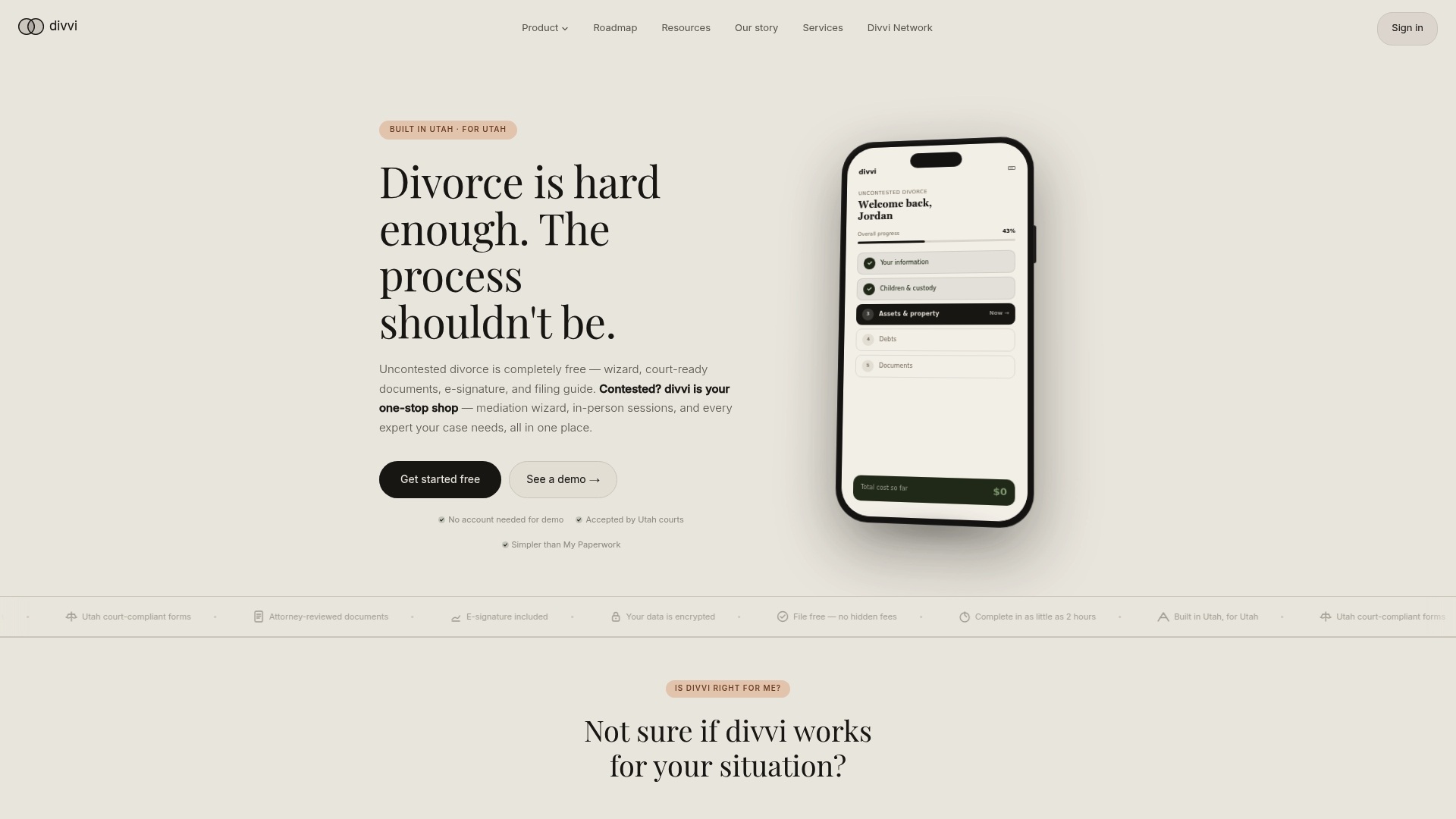
The platform's step-by-step document wizard generates documents designed for filing tailored to Utah's district courts. For parents heading into the Co-Parenting Mediation Program, Divvi connects you with vetted Utah mediators and provides mediation preparation resources so you walk in with a clear proposal, not just a complaint. Parents who need to modify an existing supervised parent-time order later can use Divvi's modification tools to prepare the motion and supporting documents without starting from scratch.
The base platform is free. You pay only for the services you actually need, such as mediation when you and the other parent disagree (divvi Mediate Pro includes filing support through divviFile). Start your case at Divvi and see exactly what your situation requires before you spend a dollar.
Sources
- Utah Co-Parenting Mediation Program
- Utah Code § 81-9-207 — Supervised parent-time.
- Divorce
- Supervised Family Time – Family Support Center
For cases involving domestic violence, active protective orders, or contested custody, consult a licensed Utah family law attorney before filing. This article provides general legal information, not legal advice, and you should verify current rules with the Utah Courts or a qualified professional.
This article is general information, not a substitute for advice from a qualified lawyer. Consult a qualified legal professional about your own circumstances before acting on anything here.