How to Enforce a Divorce Decree in Utah: 2026 Guide
Written and reviewed by the divvi team. How we research and check this.

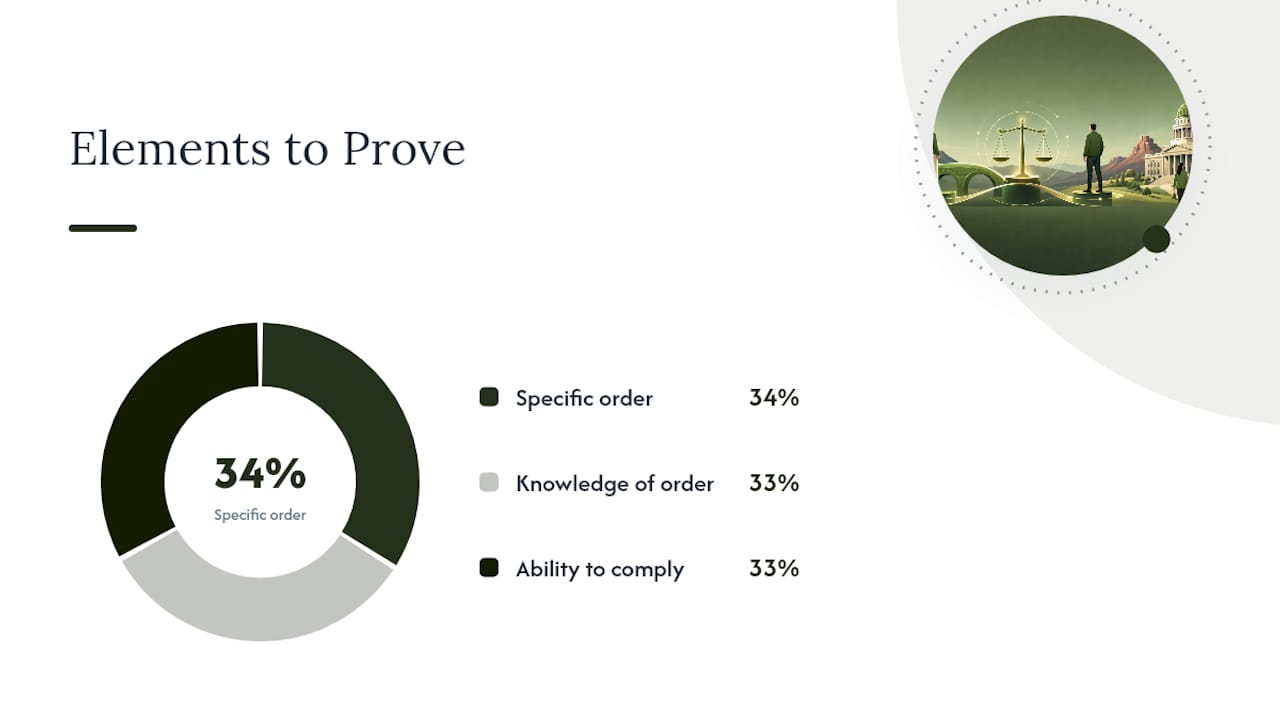
In Utah, you enforce a divorce decree by filing a Motion to Enforce Order with the same court that issued the original decree. Most domestic relations enforcement actions follow URCP Rule 7B, which governs motions to enforce and for sanctions in family law matters. To succeed, you must prove three things:
- A clear, specific court order exists — the decree or order must be unambiguous about what the other party was required to do.
- The other party knew about the order — they were properly served and had actual notice.
- The other party had the ability to comply but willfully failed to do so — inability to comply is a recognized defense, so you need evidence of their financial capacity or access to the asset at issue.
Your immediate next step: gather the controlling order (a certified copy of the decree), your payment records or communications showing the violation, and download the correct form set from Utah Courts. For domestic relations matters, that is typically the Ex Parte Verified Motion to Enforce Domestic Order and for Sanctions (form 1150FA). If you want form assistance or a document kit built around your specific situation, Divvi's enforcement document tools are a practical starting point before you file.
Key Takeaways
Enforcing a Utah divorce decree requires the right motion, the right evidence, and a clear understanding of the three legal elements courts use to evaluate compliance.
| Point | Details |
|---|---|
| File the right motion | Use a Motion to Enforce under URCP Rule 7B for most domestic relations enforcement actions in Utah. |
| Prove three elements | Show a clear order existed, the other party knew about it, and they had the ability but willfully failed to comply. |
| Evidence wins hearings | Bring a certified order copy, payment records, bank statements, and a one-page chronological timeline linking each violation to a numbered exhibit. |
| Remedies escalate | Courts start with judgments and income withholding; contempt fines and jail are reserved for persistent, willful refusal. |
| Divvi speeds prep | Divvi's free document wizard generates enforcement forms designed for filing and affidavit templates for Utah residents. |
Table of Contents
- What enforcement options does Utah law give you?
- Which motion should you file, and when?
- Step-by-step: how to file a Motion to Enforce in Utah
- What you must prove — and the evidence that wins the hearing
- What the court can order if you prevail
- Child support, custody, and enforcing out-of-state decrees in Utah
- What to do when the decree is vague or circumstances have changed
- How to organize exhibits and prepare for the hearing
- Filing fees, costs, and when to hire a lawyer
- What enforcement really comes down to
- Divvi helps you get enforcement-ready documents fast
- Authoritative Utah forms, rules, and guidance
- Sources
What enforcement options does Utah law give you?
Utah courts offer a range of remedies depending on what the other party failed to do. Not every situation calls for contempt. Matching the right tool to the right problem saves time and improves your odds at the hearing.
The main enforcement mechanisms:
- Motion to Enforce Order (Rule 7B): The standard route for domestic relations matters. You file in the same case, and the court schedules a hearing. This is the workhorse of divorce decree enforcement in Utah.
- Order to Show Cause: Used in some districts as an alternative or supplement. The court orders the non-complying party to appear and explain why they should not be held in contempt. An initial appearance often determines whether a full evidentiary hearing is needed.
- Civil contempt: A finding that the other party willfully violated the order. Sanctions can include fines, attorney fee awards, or, in persistent cases, jail.
- Wage garnishment / income withholding: Particularly common for unpaid child support or alimony (spousal support). Utah statutes authorize direct withholding from an employer's payroll.
- Judgment for arrears: The court converts unpaid support or alimony into a money judgment, which then accrues interest and can be collected like any civil judgment.
- Judgment lien: A lien placed on real property owned by the non-complying party, useful when a property-transfer order has been ignored.
- Tax refund intercepts: The state child support office can intercept state and federal tax refunds for child support arrears.
- Modification: When enforcement fails because circumstances have genuinely changed, a modification motion addresses the root cause rather than punishing past non-compliance.
The table below maps common enforcement goals to the remedy courts typically use and the key condition that must be met.
| Enforcement goal | Primary remedy | Key condition |
|---|---|---|
| Collect unpaid child support | Income withholding / judgment for arrears | Documented payment shortfall; arrears amount stated |
| Compel parent-time compliance | Motion to Enforce (Rule 7B) / contempt | Willful denial shown; specific dates documented |
| Enforce property transfer order | Motion to Enforce / judgment lien | Order specifies asset; transfer deadline passed |
| Collect unpaid alimony | Wage garnishment / judgment for arrears | Payment records showing amounts and dates owed |
| Compel debt payment per decree | Motion to Enforce / contempt | Order assigns debt; creditor action or damage shown |
Statutory authority for garnishment, liens, and child support enforcement mechanisms sits in Utah Code, accessible through Le for readers who want the precise statutory citations.
Which motion should you file, and when?
The answer depends on your district, the type of violation, and how quickly you need the court to act.
Motion to Enforce under Rule 7B is the right choice for most domestic relations enforcement actions. It is the current, preferred procedural vehicle. File it in the same case number as the original decree. Rule 7B sets the framework for timing, service, and the commissioner or judge hearing path. If you are dealing with unpaid child support, denied parent-time, or an ignored property-transfer order, this is almost certainly the form you need.
Order to Show Cause is used in some districts and some situations where the court's contempt power needs to be invoked more directly. The Motion for Order to Show Cause materials explain that the process typically requires a supporting affidavit and that an initial appearance often determines whether a full evidentiary hearing follows. Some older cases and pre-2021 procedures still reference this language; using the current Rule 7B forms minimizes procedural objections in modern practice.
Ex parte orders are available in some districts when there is an urgent need — for example, an imminent asset transfer that would defeat enforcement. These require a sworn affidavit and a showing of immediate harm. Not every district grants them routinely, so check your local court's self-help page first.
Commissioner vs. judge path: In most Utah districts, domestic relations motions are heard first by a court commissioner. The commissioner makes a recommendation; either party can object within 14 days and request a de novo review by the district judge. In the 3rd Judicial District (Salt Lake), parent-time denial has a specific expedited process. If your case involves repeated parent-time denial, ask the clerk about the district's current parent-time enforcement procedures, because local rules can affect your timeline.
If/then decision rules:
If the other party simply stopped paying child support and has a job, file a Motion to Enforce and request income withholding and a judgment for arrears. If the other party is denying parent-time and you need a fast hearing, file a Motion to Enforce and ask the court to set an expedited hearing date. If you are in the 3rd Judicial District and parent-time is being denied, check whether the district's specific parent-time enforcement form applies. If the decree is vague about what was required, consider a motion to clarify before filing for contempt — an ambiguous order is hard to enforce.
Parent-time is Utah's statutory term for what most people call the custody schedule or visitation schedule; the words mean the same thing.
Pro Tip: Check your district's local rules before filing. The 3rd Judicial District, for example, has procedural nuances for parent-time enforcement that differ from other districts. A quick call to the courthouse self-help desk can save you a rejected filing.
Step-by-step: how to file a Motion to Enforce in Utah
Follow this sequence to avoid common procedural mistakes.
Obtain a certified copy of the controlling order. The court needs to see the exact language it is being asked to enforce. Get a certified copy from the clerk's office if you do not already have one.
Gather and organize your supporting documents. Payment records, bank statements, text or email communications, employer records, and any receipts relevant to the violation. Organize them chronologically before you touch the forms.
Select the correct form. For domestic relations matters (divorce, child support, custody), use the Ex Parte Verified Motion to Enforce Domestic Order and for Sanctions (form 1150FA). For non-domestic matters, use the Ex Parte Verified Motion to Enforce Order and for Sanctions (form 1170GE). Both forms include checkboxes for the type of relief requested and fields for stating arrears amounts and dates.
Complete the motion form. State the specific order provision violated, the dates of violation, the amounts owed (if applicable), and the relief you are requesting. A sample sentence you can adapt: "Pursuant to the Decree of Divorce entered [date], Respondent was ordered to pay $[amount] per month in child support; Respondent has failed to make payments for [months], leaving arrears of $[total], and Petitioner requests a judgment for that amount plus attorney fees."
Attach your exhibits. Number each exhibit and reference it in the motion body. The form instructs you to attach supporting documents; do not skip this step.
File in the original case. Take the completed motion and exhibits to the clerk's office for the same case number as your divorce. Pay the filing fee (see the costs section below for general ranges).
Serve the other party. After filing, serve the motion and any scheduling order on the other party according to Utah Rules of Civil Procedure. Keep your proof of service — you will need it at the hearing.
Respond to any counter-motion. The other party typically has 14 days to respond under Rule 7B. Read any response carefully; it often previews the defenses they will raise at the hearing.
Prepare for the first appearance. The commissioner or judge will review the motion and may set a briefing schedule or an evidentiary hearing date. Bring your exhibit binder and a one-page timeline to every appearance.
Key timing notes:
- Response deadline under Rule 7B: typically 14 days from service.
- Ex parte filings may be heard without prior notice to the other party, but the court will schedule a follow-up hearing.
- Commissioner recommendations can be objected to within 14 days for de novo review by a judge.
What you must prove — and the evidence that wins the hearing
Courts apply a clear-and-convincing evidence standard in civil contempt and enforcement hearings. That is a higher bar than the preponderance standard used in most civil cases, and it means your evidence needs to be organized, specific, and credible.
The three elements you must establish:
A clear, specific court order was entered. Vague orders are nearly impossible to enforce. If the decree says "the parties shall cooperate regarding the children," that is not specific enough for contempt. If it says "Respondent shall pay $1,200 per month in child support on the first of each month," that is enforceable.
The other party had knowledge of the order. Proof of service of the original decree, or their attorney's signature on a stipulated order, usually satisfies this element. If they appeared in court when the order was entered, that is even stronger.
The other party had the ability to comply but willfully failed. This is where most hearings are won or lost. You need evidence that the other party had the financial means or physical ability to comply. Pay stubs, tax returns, bank statements showing spending on non-essentials, social media posts showing travel or purchases — all of it is fair game.
Evidence checklist:
- Certified copy of the decree or order (the controlling document)
- Payment ledger or account statements showing what was paid and what was owed
- Bank statements for the relevant period (yours and, if obtainable, theirs)
- Pay stubs or employer records showing the other party's income
- Text messages, emails, or voicemails documenting the violation or admissions
- Affidavit from you, signed under penalty of perjury, with a concise timeline of violations
- Witness contact information (employer, accountant, or anyone with direct knowledge)
- Receipts for expenses you incurred because of the non-compliance (childcare, alternative housing, etc.)
For your affidavit, cover: the specific order provision at issue, a chronological list of violations with dates and amounts, the total harm or arrears claimed, and a declaration that the facts are within your personal knowledge. Keep it tight — two to three pages maximum.
Pro Tip: Judges appreciate a one-page timeline that links each violation to a numbered exhibit. Prepare it as a separate document, not buried in the affidavit. Courts sometimes adopt the timeline as part of their findings, which makes your job easier on appeal or in future enforcement actions. A divorce discovery checklist can help you identify every document category before you start organizing.
What the court can order if you prevail
Winning an enforcement motion does not automatically mean the other party goes to jail. Courts treat contempt sanctions as a ladder, starting with the least coercive remedy and escalating only when lower-level orders fail.
Common remedies, roughly in order of escalation:
- Judgment for arrears with statutory interest — the most common first-line remedy for unpaid support or alimony. The judgment is enforceable like any civil money judgment.
- Income withholding order — the court directs the other party's employer to deduct support payments directly from their paycheck. Highly effective when the other party is employed.
- Attorney fee award — Utah courts can shift attorney fees to the non-complying party in family law enforcement actions. This is a meaningful deterrent and worth requesting in your motion.
- Contempt finding with a fine — a monetary sanction for willful non-compliance, often paired with a purge condition (a specific action the party can take to avoid further sanctions).
- Tax refund intercept — the state child support office coordinates with the IRS and the Utah State Tax Commission to intercept refunds for child support arrears.
- Judgment lien on real property — useful when a property-transfer order has been ignored. The lien attaches to any real property the other party owns in Utah.
- Jail — reserved for persistent, willful refusal after other remedies have failed. Courts are reluctant to use incarceration because it typically makes compliance less likely, not more. When it is ordered, it usually comes with a purge condition.
- Order modification — if the court finds that circumstances have materially changed, it may modify the underlying order rather than (or in addition to) imposing contempt sanctions.
Property-transfer orders deserve a specific note. If the decree required the other party to transfer a vehicle title, sign a deed, or execute a QDRO for a retirement account, and they have not done so, the court can order them to comply or, in some cases, authorize a third party to execute the document on their behalf. If the asset has already been dissipated or transferred to a third party, the court's options narrow considerably — which is why acting quickly matters.
Child support, custody, and enforcing out-of-state decrees in Utah
Child support and parent-time enforcement
Utah's child support enforcement system has tools beyond what a private motion offers. The Utah Office of Recovery Services (ORS) handles administrative enforcement of child support orders — income withholding, license suspension, tax intercepts, and passport denial — without requiring you to file a court motion. If you are owed significant arrears and the other parent is employed, ORS is often the fastest path.
For parent-time denials, the Motion to Enforce under Rule 7B is the standard vehicle. Document every denied visit: date, time, what happened, and any communications. The 3rd Judicial District has a specific expedited process for parent-time enforcement; other districts handle it through the standard commissioner hearing path. Check your district's self-help page for current local forms and procedures.
Enforcing out-of-state and foreign divorce decrees
If your divorce decree was entered in another state, Utah will enforce it under the Uniform Child Custody Jurisdiction and Enforcement Act (UCCJEA) for custody and parent-time orders, and under the Parental Kidnapping Prevention Act (PKPA) for federal full-faith-and-credit requirements. For child support, the Uniform Interstate Family Support Act (UIFSA) governs.
Practical steps for interstate enforcement:
- Register the foreign order in a Utah district court before seeking enforcement. File a certified copy of the out-of-state order with the clerk and follow the registration procedures under UIFSA or UCCJEA.
- Use ORS for support collection across state lines. ORS can coordinate with the other state's child support agency to establish income withholding in the other state.
- Request that the Utah court adopt and enforce the foreign judgment once it is registered. After registration, the foreign order is treated as a Utah order for enforcement purposes.
- Check whether Utah has jurisdiction. Under the UCCJEA, Utah can exercise jurisdiction to enforce a custody order if Utah is the child's home state or if the issuing state has declined jurisdiction. If the other parent lives out of state and refuses to comply, ORS and the UCCJEA registration process are your two primary tools.
What to do when the decree is vague or circumstances have changed
An ambiguous order is a serious problem for enforcement. If the decree says "the parties shall divide the household furniture equitably," a contempt motion will likely fail because the other party can credibly argue they did not understand what was required. Courts are reluctant to hold someone in contempt for violating an order they could not reasonably interpret.
The decision flow:
If the order is specific and the other party simply did not comply, enforce as written. If the order is ambiguous, file a motion asking the court to clarify the provision before pursuing contempt. If circumstances have materially changed since the order was entered — a job loss, a relocation, a significant change in the child's needs — a divorce decree modification addresses the underlying problem rather than punishing past non-compliance.
Sample clarification language you can adapt for a motion: "Petitioner requests that the Court clarify paragraph [X] of the Decree of Divorce entered [date], specifically whether [ambiguous provision], and requests a limited evidentiary hearing if necessary to resolve the ambiguity."
A motion to clarify is narrower and cheaper than a full modification motion. It does not require you to prove a substantial material change in circumstances — only that the existing language is susceptible to more than one reasonable interpretation.
Pro Tip: File a motion to clarify before a contempt motion when the order is genuinely ambiguous. A judge who sees you tried to resolve the ambiguity first will view your subsequent enforcement motion more favorably — and the clarification order itself becomes the unambiguous order you can enforce.
How to organize exhibits and prepare for the hearing
The difference between a persuasive enforcement hearing and a chaotic one usually comes down to exhibit organization. Utah courts expect clear-and-convincing evidence, and a focused, chronological exhibit set makes that standard easier to meet.
Exhibit organization template:
- Create a tabbed binder (physical) or a PDF exhibit folder (for electronic filing). Number each exhibit sequentially: Exhibit 1, Exhibit 2, and so on.
- Prepare an exhibit index as the first page: exhibit number, description, and the enforcement element it supports.
- Attach a one-page timeline as a separate document. Each row should list a date, the event or violation, and the exhibit number that proves it. Keep it to one page — judges read it during the hearing.
Hearing preparation checklist:
- Review the three enforcement elements and confirm you have evidence for each one.
- Prepare a two-sentence opening factual statement: what the order required, and what the other party did instead.
- Know your key exhibits cold. You should be able to say "Exhibit 3 is the bank statement showing no payment was received in March" without fumbling.
- Prepare your witnesses. Anyone testifying should know what questions to expect on direct examination and how to answer cross-examination about the other party's claimed inability to pay.
- Anticipate the inability-to-pay defense. Bring pay stubs, tax returns, or bank statements that show the other party's financial capacity during the period of non-compliance. If they claim they were unemployed, check their LinkedIn or social media for contradictory evidence.
Realistic hearing expectations:
- First appearances before a commissioner are often brief — 15 to 30 minutes. The commissioner may set a briefing schedule or an evidentiary hearing date rather than ruling immediately.
- Evidentiary hearings run longer. Budget at least an hour, possibly more for complex cases.
- Fee-shifting requests are typically addressed at the end of the hearing or in a post-hearing order. Have your attorney fee documentation ready (billing records or a declaration of fees incurred).
- Judges often signal their thinking during questioning. Listen carefully and be prepared to address the weakness in your case before the judge raises it.
Divvi's document kits include affidavit templates, exhibit organizers, and timeline tools that can cut your preparation time significantly. For high-stakes or contested enforcement matters, consider having a Utah-licensed attorney check your motion before filing.
Filing fees, costs, and when to hire a lawyer
Court filing fees for enforcement motions in Utah vary by district and case type. The Utah Courts fee schedule lists current amounts; as a general range, motion filing fees in civil and domestic relations cases typically run from roughly $50 to a few hundred dollars depending on the relief requested and whether a new case filing fee applies. Check the current fee schedule at utcourts.gov before you file, because fees are updated periodically.
Service costs add to the total. Personal service by a process server typically costs $50 to $150 depending on location and number of attempts. If the other party cannot be located after reasonable efforts, you can request alternative service — but have affidavit evidence of your search efforts ready when you file.
Attorney fee recovery is available in Utah family law enforcement actions. If you prevail, the court can order the non-complying party to pay your attorney fees and costs. Request it in your motion and document your fees throughout the process.
Your options, matched to your situation:
- Self-file with Divvi tools: Best for straightforward enforcement matters where the order is specific, the violation is documented, and the amounts are clear. Divvi's document wizard generates forms designed for filing and affidavit templates. Free for basic document preparation; an attorney referral available.
- Independent document review: You prepare the documents. divvi is not a law firm and doesn't give legal advice.
- Full representation: Appropriate when the other party has counsel, when the amounts are large, when the case involves complex property or business interests, or when the other party is likely to raise substantial defenses. See contested divorce support services for guidance on when full representation makes sense.
Low- or no-cost resources:
- Utah Legal Services (utahlegalservices.org) provides free civil legal help to qualifying low-income residents, including family law enforcement matters.
- Utah Courts self-help centers at courthouses offer procedural guidance (not legal advice) and can help you identify the correct forms.
- The Utah Office of Recovery Services handles child support enforcement administratively at no direct cost to the custodial parent.
Decision checklist: Is the order specific and the violation documented? Self-file with form assistance. Are the amounts large or the defenses complex? Add attorney review. Does the other party have counsel? Consider full representation. Is this purely a child support collection issue? Contact ORS first.
What enforcement really comes down to
Most enforcement motions that fail do so for one of three reasons: the underlying order was too vague to enforce, the moving party showed up without organized evidence, or they underestimated the other party's ability-to-pay defense.
The inability-to-pay defense is the one that catches people off guard most often. A respondent who claims they lost their job, had a medical crisis, or simply ran out of money can derail a contempt motion even when the non-compliance is obvious. The counter to it is preparation: bank statements showing spending on non-essentials during the same period, social media evidence of travel or purchases, or employment records that contradict the claimed job loss. Prepare both your direct evidence track and your rebuttal track before the hearing.
Three things that consistently improve outcomes:
- Build your affidavit around the three enforcement elements, not around your frustration with the other party. Judges respond to legal structure, not emotional narrative.
- Organize a one-page timeline that links each violation to a numbered exhibit. Courts sometimes adopt this timeline in their findings.
- Expect the first appearance to be procedural, not substantive. Use it to get a firm evidentiary hearing date and to signal to the court that you are organized and ready.
The readers who get the best results are the ones who treat the hearing like a presentation, not a complaint session. The evidence does the talking.
Divvi helps you get enforcement-ready documents fast
When you are facing a non-compliant ex-spouse, the last thing you need is to spend days figuring out which form to file. Divvi gives Utah residents a faster path: motion-to-enforce templates designed for filing, affidavit builders, exhibit organizers, and a step-by-step document wizard that walks you through your specific situation, whether you are collecting unpaid child support, enforcing a property transfer, or documenting parent-time denials.
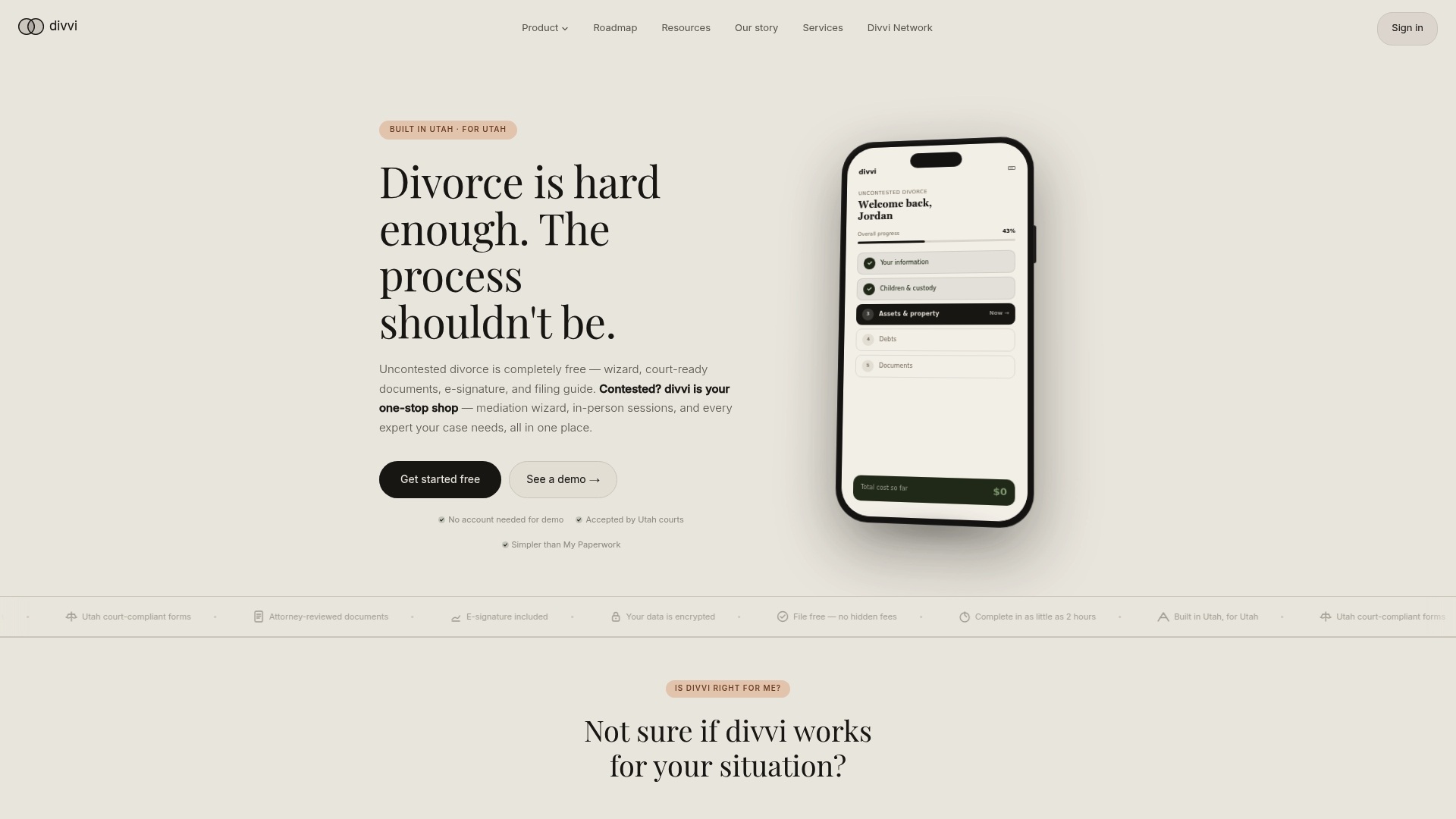
The base document tools are free. For contested or high-stakes enforcement matters, Divvi's divviReview add-on runs an AI check of your documents against Utah court requirements before they go to the clerk, flagging missing fields and inconsistencies. Divvi is not a law firm and does not give legal advice. Mediation services are also available through Divvi's mediator network for situations where a negotiated resolution might be faster than a hearing. Post-decree modifications, co-parenting plan tools, and QDRO preparation round out the platform for readers dealing with more than one enforcement issue at once.
This is a service offer, not legal advice. For complex, high-stakes, or contested enforcement matters, consult a Utah-licensed attorney. Ready to start? Build your enforcement documents with Divvi's free wizard today.
Authoritative Utah forms, rules, and guidance
Download and save these official resources before you file. Forms and rules on the Utah Courts site are updated periodically; always pull the current version directly from utcourts.gov rather than relying on a saved copy.
| Resource | Description | Official link |
|---|---|---|
| Motion to Enforce Order (self-help page) | Overview of the enforcement process and links to all domestic-relations enforcement forms | Utcourts |
| Form 1150FA — Ex Parte Verified Motion to Enforce Domestic Order | The standard form for domestic relations enforcement (divorce, child support, custody); includes fields for arrears and fee requests | Download form 1150FA |
| Form 1170GE — Ex Parte Verified Motion to Enforce Order and for Sanctions | Use for non-domestic enforcement matters; same checkbox structure as 1150FA | Download form 1170GE |
| Motion for Order to Show Cause | Guidance and form for order-to-show-cause process; includes affidavit requirements | Download OSC motion |
| URCP Rule 7B | The controlling procedural rule for motions to enforce and for sanctions in domestic relations matters | Read Rule 7B |
| Utah Courts — Divorce self-help | General divorce enforcement guidance and links to all related forms and procedures | Divorce self-help page |
Use form 1150FA for any domestic relations matter (divorce decree, child support order, custody order). Use form 1170GE for enforcement of other civil orders. For district-specific variations, check your local court's self-help desk or the district's local rules page on utcourts.gov before filing.
This article is general information, not a substitute for advice from a qualified lawyer. Consult a qualified legal professional about your own circumstances before acting on anything here.
Sources
- Motion to Enforce Order
- URCP Rule 7B (Rules of Civil Procedure) - Utah Courts
- Ex Parte Verified Motion to Enforce Domestic Order and for Sanctions
- Ex Parte Verified Motion to Enforce Order and for Sanctions
- Motion for Order to Show Cause
- Utah Order to Show Cause: How to File and What to Expect - LegalClarity