Utah Domestic Relations Injunction: What It Bars and When
Written and reviewed by the divvi team. How we research and check this.

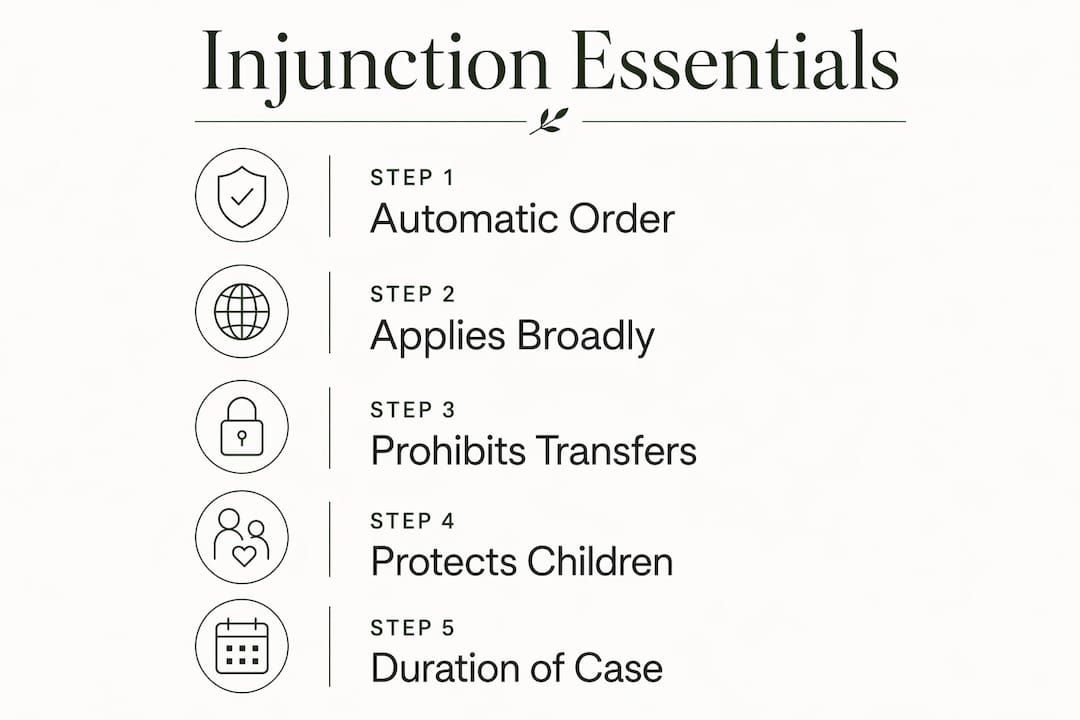
When you file for divorce, custody, or support in Utah, a court order goes into effect automatically. No judge needs to sign it separately, no hearing is required. This is the domestic relations injunction, under Utah Rule of Civil Procedure 109.
The injunction applies to divorce, annulment, temporary separation, custody, parent time, support, and paternity cases. It binds the petitioner immediately upon filing. The respondent becomes bound once they receive a copy through proper service. One notable exclusion: the Office of Recovery Services is not subject to this rule.
The injunction's core purpose is to freeze the status quo. It prevents either party from taking actions that could harm the other, drain shared assets, or put children in the middle of an adult dispute, all before the court has had a chance to issue specific orders.
Table of Contents
- What the domestic relations injunction in Utah actually prohibits
- How the injunction protects minor children
- When the injunction takes effect and how long it lasts
- How to modify or dissolve the injunction
- What Utah Rule of Civil Procedure 109 actually says
- Practical steps for staying in compliance
- How a domestic relations injunction differs from other protective orders
- Resources and legal help for those navigating the injunction
- Divvi makes Utah divorce less complicated
- Key Takeaways
What the domestic relations injunction in Utah actually prohibits
Utah Rule 109 lays out a clear list of prohibited actions that apply to both parties in every covered case:
- Harassing, intimidating, or disturbing the peace of the other party by any means, including electronically
- Committing domestic violence or abuse against the other party or a child
- Using the other party's name, image, or identification to obtain credit, open accounts, or access services
- Canceling or interfering with telephone, utility, or other services the other party uses
- Canceling, modifying, terminating, or changing the beneficiary on any health, homeowner's, renter's, automobile, or life insurance policy without written consent or a court order
When the petition involves dividing real estate, personal property, or debts, neither party may transfer, encumber, conceal, or dispose of any property without written consent or a court order. The only exceptions are transactions in the usual course of business or spending to cover basic necessities. Learn how Utah treats marital property division to understand what assets fall under these restrictions.
How the injunction protects minor children
When minor children are part of the case, Rule 109 adds a separate layer of protections specifically designed to shield children from conflict:
- Neither party may take children on non-routine travel without written consent from the other party or a court order. If neither exists, the traveling party must provide a full itinerary, contact information, and the name and phone number of a third person who will know the children's location.
- Neither party may demean or disparage the other parent in the children's presence or hearing, attempt to influence the children's custody or parent-time preferences, or say anything that would damage the children's relationship with the other parent.
- Neither party may involve the children in the issues raised by the petition.
- Neither party may make parent-time arrangements through the children themselves.
The responsibility goes further than just personal conduct. When children are in your care, you must use your best efforts to prevent anyone else from violating these provisions. If a situation arises where someone is doing so, you are required to remove the children from it.
When the injunction takes effect and how long it lasts

Timing matters here, and the rule is straightforward. The injunction binds the petitioner the moment the petition is filed. The respondent is not bound until they actually receive a copy of the injunction as entered by the court. Other laws and existing court orders still apply before the respondent receives the injunction.
The injunction stays in effect until one of four things happens:
- The final decree is entered
- The petition is dismissed
- Both parties agree in writing, signed by all parties
- The court issues an order ending it
There is no automatic expiration date tied to a calendar. The injunction runs the full length of the case unless one of those conditions is met first.
How to modify or dissolve the injunction
Either party has the right to file a motion asking the court to modify or dissolve the injunction. The procedure depends on where the case stands when the motion is filed.
If the motion is filed before the respondent has filed an answer or other responsive pleading, the court will move on it as quickly as possible. The moving party must serve the other party with reasonable prior notice before any hearing. After a responsive pleading has been filed, the motion follows standard procedures under Utah Rule of Civil Procedure 7 or Rule 101, depending on the circumstances.
One important point: if a separate order already governs the parties or their children, such as a protective order, that order controls over any conflicting provisions in the domestic relations injunction. The injunction does not automatically override existing orders. For guidance on modifying court orders after a decree, the decree modification process in Utah follows similar procedural logic.
What Utah Rule of Civil Procedure 109 actually says
Rule 109 is the procedural foundation for everything described here. It mandates that the court enter an injunction automatically when an initial petition is filed in any of the covered case types. The rule does not require a party to request it, and the court does not hold a hearing before issuing it.
The rule's scope covers divorce, annulment, temporary separation, custody, parent time, support, and parentage. Only the provisions relevant to the specific case apply. A custody-only case, for example, triggers the children's provisions but not necessarily the property division restrictions if property is not at issue.
Rule 109 also coordinates with other court orders. When a separate order conflicts with the injunction's provisions, the separate order wins. This prevents the injunction from inadvertently overriding a protective order or a prior custody arrangement already in place.
Pro Tip: Print or save a copy of the injunction entered by the court, not just the petition. The version "as entered by the court" is the controlling document, and the respondent must receive that specific version for the injunction to bind them.
Practical steps for staying in compliance
Compliance starts with service. The petitioner carries the responsibility of getting the injunction to the respondent through any means reasonably calculated to give notice. Until that happens, the respondent is not legally bound, which creates a window of exposure for the petitioner.
Financial transactions deserve close attention. The "usual course of business" and "basic necessities" exceptions sound clear, but they are frequently contested. An expense that seems routine to one party can look like a violation to the other. Documenting every significant financial transaction from the moment you file is not optional; it is protection against future disputes. A divorce discovery checklist can help you track assets and transactions systematically throughout the case.
Avoid any action involving insurance policies, utilities, or joint accounts without getting written consent first. Even well-intentioned changes can be treated as violations. When in doubt, file a motion and get a court order before acting.
How a domestic relations injunction differs from other protective orders
The domestic relations injunction and a protective order are not the same thing, and confusing them can leave you exposed.
The domestic relations injunction is automatic and applies to both parties equally. It is a baseline order designed to maintain the status quo during litigation. It does not require any showing of danger or wrongdoing to take effect. Every covered case gets one, regardless of the parties' relationship or conduct.
A protective order, by contrast, requires a party to petition the court and demonstrate that domestic violence or abuse has occurred or is threatened. It is targeted, not mutual, and it can include provisions the domestic relations injunction does not, such as requiring a party to vacate a shared residence or stay away from specific locations. If you are concerned about safety, a protective order offers protections the injunction simply was not designed to provide. Questions about property access during this period, including who can remain in the home, are addressed under Utah property rules that apply alongside both types of orders.
When both orders exist and they conflict, the separate order controls.
Resources and legal help for those navigating the injunction
The Utah Courts self-help website publishes the official domestic relations injunction form (form 1900FA), which is the document the court enters in your case. Reading it carefully is the fastest way to understand exactly what you are and are not permitted to do.
For cases involving children, a Utah child support calculator can help you estimate support obligations while the injunction is in effect, since financial arrangements are often unsettled during the litigation period. The Utah Courts also maintain self-help centers at courthouses across the state for parties who need procedural guidance without hiring an attorney.
If your case involves contested property, custody disputes, or a spouse who is not cooperating, self-help resources have limits. An attorney familiar with Utah divorce laws can advise you on whether to seek a motion to modify the injunction or pursue specific temporary orders for support, custody, or property use.
Divvi makes Utah divorce less complicated
Facing a domestic relations injunction while managing a divorce or custody case is stressful enough without also wrestling with paperwork, court forms, and procedural deadlines.
Divvi gives Utah residents a free starting point for uncontested divorce, with a step-by-step document wizard that generates documents designed for filing without the attorney hourly rate. For contested cases, Divvi connects you with attorney referrals, mediation options, and professionals including real estate agents and financial advisors, paying only for what your situation actually requires. Post-divorce modifications, co-parenting tools, and compliance resources are built into the same platform. Start your case at Divvi's divorce platform and see exactly what your situation calls for before spending a dollar.
Key Takeaways
The domestic relations injunction in Utah is an automatic, mutual court order that binds both parties in covered family law cases, prohibiting specific actions to preserve the status quo until the case concludes.
| Point | Details |
|---|---|
| Automatic issuance | The injunction enters when the petition is filed, with no hearing or separate request required. |
| Binding timing | The petitioner is bound immediately; the respondent is bound only after receiving a copy via service. |
| Duration | The injunction stays in effect until a final decree, dismissal, written agreement, or court order ends it. |
| Modification process | Either party may file a motion; hearings require reasonable prior notice to the other party before the hearing. |
| Divvi | Divvi offers free uncontested divorce documents and full contested case support for Utah residents navigating family law proceedings. |