Utah Divorce Laws in 2026: Residency, Grounds, and Costs
Written and reviewed by the divvi team. How we research and check this.
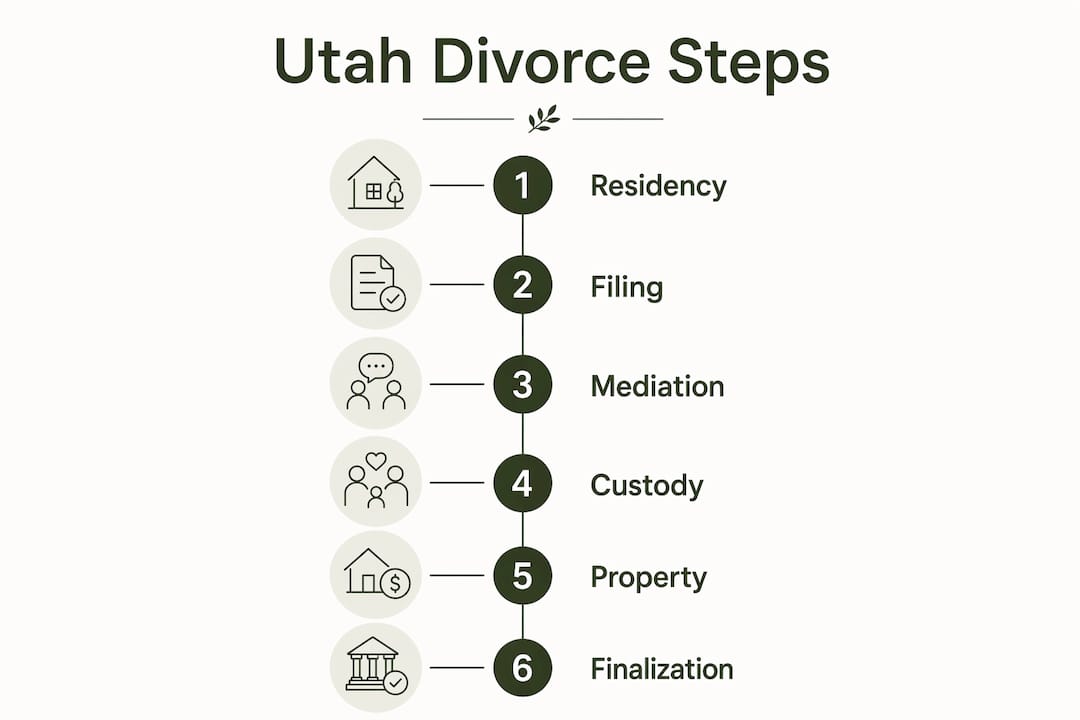
Utah divorce laws require at least 90 days of continuous residency in the specific county where you file, and the state recognizes irreconcilable differences as the primary no-fault ground for ending a marriage. Most divorces in Utah follow a predictable legal path, but the details around custody, property, and costs can catch people off guard. Knowing the rules before you file saves time, money, and stress. This guide covers every major requirement under Utah divorce law, from filing fees and waiting periods to child custody standards and what contested cases actually cost.
What are the residency and filing requirements for Utah divorce laws?
Utah imposes a strict dual residency requirement before you can file. At least one spouse must have lived in both Utah state and the specific county of filing for 90 consecutive days immediately before submitting the petition. Moving to a different county resets that 90-day clock entirely, which surprises many people who relocate during a separation.

The court filing fee is $358 for a divorce petition. If your spouse files a counterclaim, additional fees apply on top of that base amount.
Once you file, Utah law builds in mandatory waiting periods before a judge can sign the final decree:
- Standard waiting period: 30 days after filing
- Cases involving minor children: 90 days minimum before finalization
- Automatic Temporary Restraining Orders (ATROs): These activate immediately on filing, prohibiting either spouse from transferring assets, canceling insurance, or cutting off essential services
ATROs protect both parties financially while the case is pending. They apply automatically, without either spouse requesting them.
Pro Tip: If you are planning to file and recently moved counties, wait out the full 90 days in your new county before submitting any paperwork. Filing too early gets your case dismissed and forces you to start over.
What grounds for divorce does Utah recognize?
Utah recognizes both no-fault and fault-based grounds for divorce, but the two categories play very different roles in practice.
Approximately 95% of divorces in Utah are filed under the no-fault ground of irreconcilable differences. This ground requires no proof of wrongdoing. It simply means the marriage has broken down beyond repair. Courts accept this without requiring either spouse to testify against the other, which keeps proceedings shorter and less expensive.
Fault-based grounds exist under Utah state divorce laws and include:
- Adultery
- Physical or emotional cruelty
- Willful desertion for at least one year
- Habitual drunkenness
- Conviction of a felony
- Impotency at the time of marriage
- Failure to provide basic necessities
Most attorneys advise against pursuing fault grounds unless there is a specific strategic reason. Proving fault requires evidence, witnesses, and court time, all of which drive up costs and extend timelines. Fault grounds rarely succeed in court, but when they do, judges may factor that conduct into alimony decisions. If one spouse committed adultery or financial abuse, raising fault in the context of spousal support can shift the outcome meaningfully.
The practical takeaway: file on irreconcilable differences unless your attorney identifies a concrete financial benefit to alleging fault.
How are child custody, parent-time, and child support determined?
Child custody decisions in Utah follow the best interests of the child standard. Courts weigh factors including each parent's relationship with the child, the child's adjustment to home and school, each parent's willingness to support the other's relationship with the child, and any history of domestic violence.
Utah law separates two distinct types of custody:
- Legal custody: The right to make major decisions about education, healthcare, and religion
- Physical custody: Where the child primarily lives and sleeps
Courts can award joint or sole versions of each type independently. A parent can have joint legal custody while the child lives primarily with one parent, for example.
The 111-overnight rule for joint physical custody
Joint physical custody requires at least 111 overnights per year with each parent. That threshold matters because it affects child support calculations directly. Parents who fall below 111 overnights are treated as the non-custodial parent under the formula, which typically means higher support payments.
How child support is calculated
Utah uses the income shares model. This model adds both parents' gross incomes together, looks up the combined support obligation on a state schedule, and then divides that obligation proportionally based on each parent's share of total income. The number of overnights also adjusts the final figure.
| Factor | How it affects support |
|---|---|
| Combined parental income | Higher combined income raises the base obligation |
| Overnights with each parent | More overnights reduce the paying parent's obligation |
| Number of children | Each additional child increases the base amount |
| Childcare and medical costs | Added directly to the base support calculation |
Pro Tip: Both parents must complete two required education courses before the court finalizes the divorce decree. These parent education courses cost a total of $65 and cover conflict reduction and child-focused co-parenting. Missing them delays your final decree.
What should you expect for property division, costs, and timelines?
How Utah divides marital property
Utah follows equitable distribution when splitting marital assets. Equitable means fair, not necessarily a 50/50 split. Courts consider the length of the marriage, each spouse's financial contribution, earning capacity, and the needs of any children when deciding what fair looks like. Separate property brought into the marriage generally stays with the original owner, but commingled assets get treated as marital property.
Uncontested vs. contested divorce: costs and timelines
The financial gap between an uncontested and contested divorce in Utah is significant.
| Type | Typical cost | Typical timeline |
|---|---|---|
| Uncontested divorce | $3,000–$5,000 | 30–90 days |
| Contested divorce | $13,200 or more | 9–18 months |
| Contested with children | Higher than standard contested | Up to 18 months or longer |
Uncontested divorces finalize faster because both spouses agree on all terms before filing. Contested cases require hearings, discovery, and often mediation, all of which add time and attorney fees.
Mediation in contested cases
Utah courts require mediation in most contested divorce cases before scheduling a trial. Mediation gives both spouses a structured setting to negotiate with a neutral third party. Cases that resolve in mediation avoid trial entirely, cutting both cost and time. Cases that fail mediation proceed to a judge, who makes the final call on all unresolved issues.
Key points about the contested process:
- Mediation is mandatory in most contested Utah divorces
- Failed mediation leads to a trial date, not an immediate ruling
- Discovery, depositions, and financial disclosures add weeks or months to contested timelines
- Attorney fees in contested cases often exceed the $13,200 average when custody is disputed
The cost breakdown for contested cases makes a strong case for resolving as many issues as possible before filing.
Key Takeaways
Utah divorce law rewards preparation: knowing residency rules, choosing the right grounds, and completing required steps on time determines how fast and how affordably your case closes.
| Point | Details |
|---|---|
| Residency is strict | You must live in your filing county for 90 consecutive days before submitting any paperwork. |
| No-fault is the standard | Irreconcilable differences resolves 95% of Utah divorces faster and at lower cost than fault grounds. |
| Custody uses the 111-overnight rule | Joint physical custody requires at least 111 overnights per year, which directly affects child support amounts. |
| Costs vary dramatically | Uncontested divorces cost $3,000–$5,000; contested cases regularly exceed $13,200. |
| Parent education is mandatory | Both parents must complete two courses totaling $65 before the court will sign the final decree. |
Where Utah divorce filings most often go wrong
People consistently underestimate two things: the county residency rule and the cost of going contested.
The 90-day county rule catches people who move during separation. They assume Utah residency is enough. It is not. Moving counties resets the clock, and filing too early gets the case dismissed. People lose weeks because they did not wait out the full period in their new county. If you are close to the 90-day mark, wait. The delay is far shorter than a dismissal and refiling.
On grounds, the instinct to allege fault is understandable when a marriage ends badly. But fault litigation is expensive and rarely changes the outcome on property division. The one area where it can matter is alimony. If your spouse's conduct directly affected your financial position, a conversation with an attorney about fault's potential impact on spousal support is worth having. Otherwise, file on irreconcilable differences and move forward.
The parent education requirement surprises people too. It is not optional, and courts will not finalize a decree until both parents complete it. Schedule those courses early. Waiting until the end of the process to complete them adds unnecessary delay.
Mediation deserves more credit than it gets. Couples who approach mediation prepared, with financial disclosures ready and realistic expectations, resolve their cases in one or two sessions. Those who arrive unprepared or adversarial drag the process out and pay for it. Mediation is not a formality. It is the most cost-effective tool available in a contested Utah divorce.
— Landon
How Divvi makes the Utah divorce process manageable
Divvi was built specifically for Utah divorces, covering everything from document preparation to mediation support.
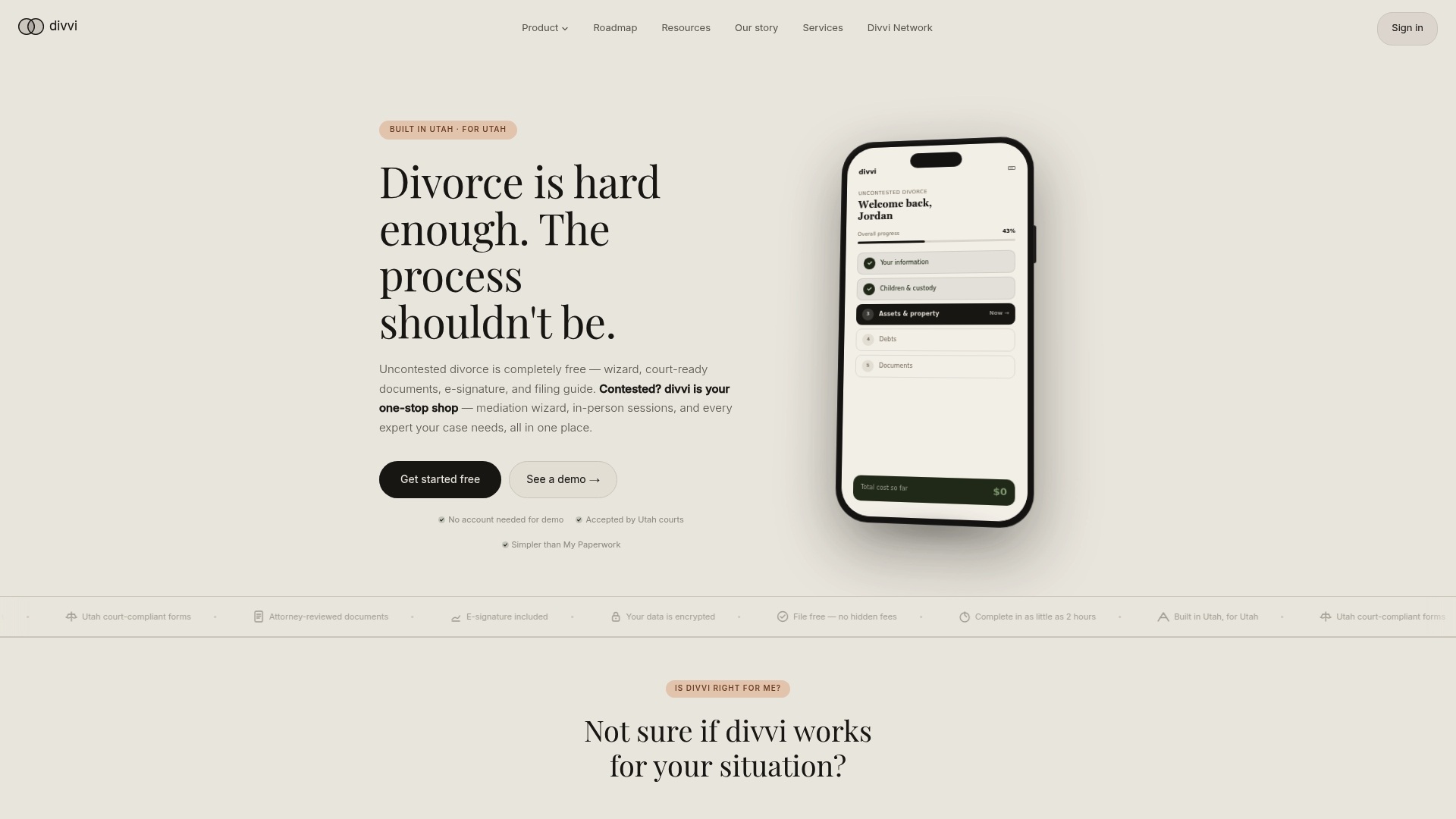
The platform walks you through a step-by-step process that generates documents designed for filing, handles both uncontested and contested cases, and connects you with vetted Utah attorneys, mediators, financial advisors, and therapists when you need them. The base model is free. You pay only for the services your specific situation requires. Whether you need a document audit before filing or professional mediation to resolve a disputed custody arrangement, Divvi has the tools and the network to support you. Start your Utah divorce filing with a platform built around your case, not a generic legal template.
FAQ
How long do you have to live in Utah to file for divorce?
You must live in Utah and in the specific county where you plan to file for at least 90 consecutive days before submitting your petition. Moving counties resets the 90-day requirement.
What is the fastest a Utah divorce can be finalized?
An uncontested divorce with no minor children can be finalized in as few as 30 days after filing. Cases involving children require a minimum 90-day waiting period before the court signs the decree.
How does Utah calculate child support?
Utah uses the income shares model, which combines both parents' gross incomes, applies a state schedule to determine the base obligation, and adjusts the amount based on each parent's share of income and number of overnights with the child.
Does fault affect property division in Utah?
Fault generally does not change how marital property is divided under Utah's equitable distribution rules. However, judges may consider a spouse's fault when determining alimony awards.
What is the average cost of a contested divorce in Utah?
Contested divorces in Utah average $13,200 or more in total costs and typically take 9–18 months to resolve, compared to $3,000–$5,000 and 30–90 days for uncontested cases.