Pros and Cons of Filing for Divorce First
Written and reviewed by the divvi team. How we research and check this.

Filing for divorce first makes you the petitioner, the spouse who formally initiates proceedings by submitting a divorce petition to the court. The pros and cons of filing for divorce first are real and consequential, but they depend far more on your specific circumstances than on any automatic legal advantage. Filing first gives you control over timing, venue selection, and early legal protections like temporary restraining orders. It also comes with upfront costs, strategic exposure, and the risk of escalating conflict before you are ready. Understanding both sides clearly is the first step toward making a decision that actually serves your interests.
What are the main advantages of filing for divorce first?
Filing first puts procedural control in your hands from day one. That control matters more in some situations than others, but the benefits are concrete.
- Timing and venue control. You choose when to file and where. Choosing the venue is significant when spouses live in different counties or states, because it affects applicable laws, court schedules, and your daily convenience.
- Debt cutoff protection. Filing establishes a legal "Date of Filing" that stops your liability for marital debt your spouse incurs after that date. States like Florida and Colorado cut off marital debt liability at this point, which matters if your spouse is running up credit cards or taking out loans.
- Immediate temporary orders. Filing first lets you request temporary court orders right away, including asset freezes and child custody arrangements to maintain the status quo while the case proceeds.
- Automatic temporary injunctions. In Colorado, for example, automatic temporary injunctions activate upon filing under C.R.S. § 14-10-107(4)(b), restricting asset transfers or child removal without consent. These protections apply to both parties eventually, but the petitioner triggers them first.
- First presentation at trial. The petitioner presents their case first. This lets you frame the narrative before your spouse responds.
- Earlier financial disclosures. Filing starts the mandatory financial disclosure clock sooner. That gives you more time to analyze your spouse's financial picture before key hearings.
Pro Tip: If you suspect your spouse is hiding assets or planning to move money, filing first and immediately requesting a temporary restraining order can freeze those assets before they disappear.
The advantages of filing for divorce first are most valuable when your situation involves financial risk, safety concerns, or a spouse who is likely to act quickly once they sense divorce is coming.

What are the major disadvantages of filing first?
The disadvantages of filing for divorce first are just as real as the benefits. Rushing to file without preparation can hurt you more than waiting.
- Higher upfront costs. Petitioner filing fees typically range from $260 to $400+, often more than what respondents pay. In Clark County, Nevada, filing fees run approximately $300–$400, with process server fees adding another $75–$150.
- Strategic exposure. Filing first means your spouse sees your initial requests and legal positions before they respond. That gives them time to craft targeted rebuttals and prepare counterarguments around your stated positions.
- Conflict escalation. An unexpected filing can trigger anger and resentment. Sudden service of papers can provoke emotional backlash that complicates negotiations, increases legal costs, and drags out the timeline, especially when children are involved.
- Administrative burden. As the petitioner, you manage more paperwork, deadlines, and procedural steps throughout the case.
- Conflict shopping risk. If you consult multiple attorneys before filing, your spouse may have already spoken with some of them, creating conflicts of interest that limit your access to experienced local counsel.
- False sense of control. Filing first feels decisive. But if your spouse has already prepared financially or legally, your early filing gives you no real advantage and may simply signal your intentions too soon.
Pro Tip: Before you file, gather tax returns, bank statements, retirement account balances, and a list of all debts. Organizing financial documents before filing is the single most important step you can take to protect your position.
The disadvantages of filing for divorce first are most damaging when you act on emotion rather than preparation. Speed without readiness is a liability, not an asset.
Common misconceptions about filing first
The biggest misconception about filing first is that it automatically produces better outcomes. It does not.
Courts apply equitable distribution standards and the best interests of the child standard regardless of who filed. Filing order rarely affects final judgments on property division or custody. Most states operate under no-fault divorce laws, where timing and fault play no role in how assets or parenting time are divided.
A second common false belief is that presenting first at trial is a major advantage. Experts caution that without solid preparation, the "first word" advantage can backfire. Presenting a weak case first simply gives your spouse a clear target to attack.
Three other misconceptions worth correcting:
- Filing first does not guarantee primary custody or a larger share of marital assets.
- Filing first is not a "win." Courts do not reward the petitioner for acting first.
- Speed of filing does not substitute for quality of preparation. A well-prepared respondent consistently outperforms an unprepared petitioner.
The order of filing is a procedural fact, not a strategic trump card. Treat it that way.
How to decide if filing first is right for your situation
The decision to file first should come from a clear-eyed assessment of your circumstances, not from anxiety or the desire to feel in control.
1. Assess financial risk. If your spouse is spending down joint accounts, transferring assets, or taking on new debt, filing first and requesting immediate temporary orders is a concrete protective step. The debt cutoff protection alone can save you thousands of dollars.
2. Evaluate safety concerns. If you face domestic violence or fear your spouse will remove children from the state, filing first and requesting emergency protective orders is not just strategic. It is necessary. Courts take these requests seriously when filed promptly.
3. Check your financial documentation. Lack of preparedness when filing first results in scrambling for documents during discovery, which weakens your case despite your early start. You need tax returns, pay stubs, bank statements, retirement account records, and a complete debt inventory before you file.
4. Consider venue implications. If you and your spouse live in different counties or states, filing first in your preferred jurisdiction can save you significant travel time and legal fees. Residency requirements still apply, so confirm eligibility before filing.
5. Gauge the relationship dynamic. If your separation is cooperative and both parties want a clean, low-conflict resolution, joint petition filing is worth considering. Joint filings reduce adversarial dynamics and can finalize an uncontested divorce in weeks rather than months.
6. Consult an attorney before filing. A 30-minute consultation with a family law attorney in your state costs far less than correcting a procedural mistake after filing. Utah residents can use Divvi's divorce services to connect with guided document preparation and legal guidance without paying full attorney rates for every step.
Pro Tip: If you are unsure whether to file first, ask yourself one question: Is my spouse likely to take a harmful financial or custody action before I am ready? If yes, file first. If no, take the time to prepare thoroughly.
The potential outcomes of filing first depend almost entirely on how prepared you are when you do it. Filing first with complete documentation and a clear legal strategy is powerful. Filing first out of fear or impulse is not.
Key takeaways
Filing first gives procedural advantages, but preparation and circumstances determine whether those advantages translate into better outcomes.
| Point | Details |
|---|---|
| Filing first has real but limited benefits | Venue control, debt cutoff, and early temporary orders are concrete advantages in the right situations. |
| Upfront costs fall on the petitioner | Expect to pay $260–$400+ in filing fees plus service costs before your spouse pays anything. |
| Courts ignore filing order for final decisions | Equitable distribution and best interests of the child standards apply regardless of who filed first. |
| Preparation matters more than speed | Organizing financial documents before filing protects your case far more than filing quickly without them. |
| Joint filing is a viable alternative | Cooperative spouses can co-petition to reduce conflict, costs, and processing time significantly. |
The "file first" instinct, examined
Landon's take on rushing versus readiness
The clients who regret filing first almost always share one thing in common: they filed to feel in control, not because they were ready. That distinction matters enormously.
Filing first feels like action. It feels like you are doing something when everything else feels chaotic. But the courthouse does not reward urgency. It rewards preparation. A spouse who files first with disorganized finances, no legal strategy, and raw emotions is handing the other side a gift.
The situations where filing first genuinely makes sense are specific. Asset dissipation is happening. A child is at risk of being relocated. Your spouse has already retained an attorney and you have not. In those cases, speed is protective. In every other case, the week you spend gathering documents and consulting counsel is worth more than the week you spend being first to the courthouse.
The other thing people underestimate is the emotional cost of filing first in a cooperative separation. Serving papers on someone who thought you were working things out together creates a wound that takes months to heal. That wound shows up in every negotiation afterward. If your separation is amicable, a joint petition is almost always the smarter path.
File first when you have a specific reason to. Otherwise, file when you are ready.
— Landon
How Divvi helps you file with confidence
Filing for divorce is a major legal step, and the paperwork alone can feel like a full-time job.
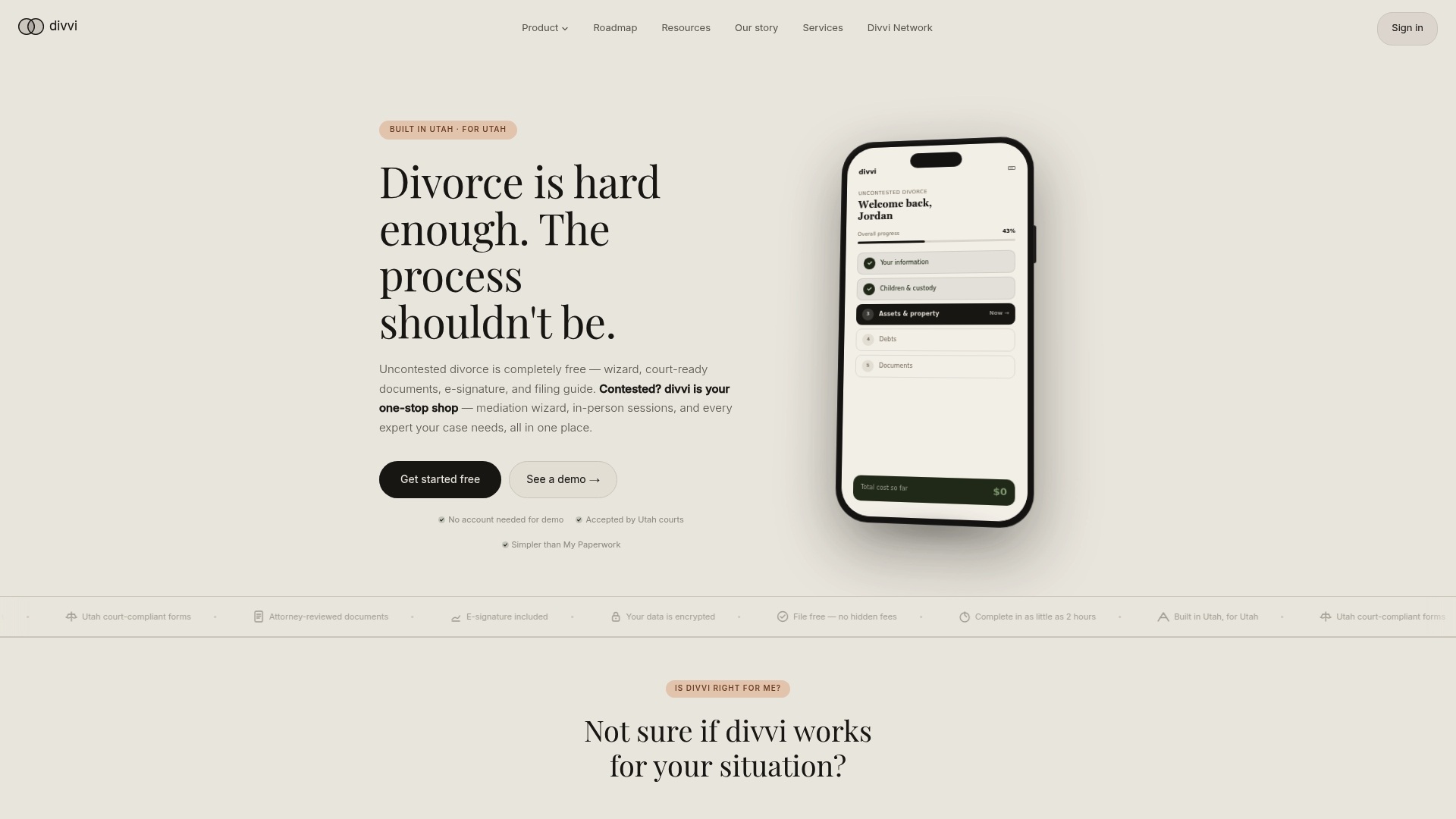
Divvi makes the process manageable. The platform walks you through a step-by-step wizard that generates documents designed for filing, whether your case is uncontested or contested. Optional links to Utah legal resources mean you are not guessing at legal language. The document audit tool helps you confirm your paperwork is complete before you file, so you are not scrambling after the fact. Divvi also connects you with mediators, financial advisors, and attorneys when your situation calls for more than documents. The base platform is free to use, and you only pay for the services you actually need. Start with the Utah divorce wizard and see how much simpler this process can be.
FAQ
Does filing for divorce first give you a legal advantage?
Filing first provides procedural advantages like venue selection, earlier temporary orders, and debt cutoff protection, but courts apply equitable standards regardless of who filed, so it rarely changes the final outcome on property or custody.
Who pays more when filing for divorce first?
The petitioner pays upfront filing fees, which typically range from $260 to $400+, plus process server costs. Respondents generally pay less at the outset.
Can filing first hurt your divorce case?
Yes. Filing first without complete financial documentation or a clear legal strategy exposes your position to your spouse and can weaken your case despite your early start.
Should I file for divorce first if I am worried about my spouse hiding assets?
Filing first and immediately requesting a temporary restraining order or asset freeze is one of the most effective ways to protect marital assets before your spouse can transfer or spend them.
What is joint petition filing and when does it make sense?
Joint petition filing, available in some jurisdictions including Colorado, allows both spouses to file together, reducing conflict and often speeding up the process. It works best when both parties agree on the major terms of the divorce.