Can a Husband Evict His Wife in Utah?
Written and reviewed by the divvi team. How we research and check this.
A husband cannot unilaterally evict his wife from the marital home in Utah, regardless of whose name appears on the deed or lease. This legal reality surprises many people, but it flows directly from the lawful occupancy rights spouses hold during marriage and separation. Whether you are the one seeking removal or the one fearing it, understanding spousal eviction legalities in Utah protects you from costly mistakes. The correct legal terms here are "exclusive occupancy orders" and "protective orders," not standard landlord-tenant eviction, and that distinction changes everything about how the process works.
Can a husband evict his wife without a court order in Utah?
No. A husband cannot remove his wife from the marital home without a court order, even if the property is solely in his name. Spouses retain occupancy rights even when they are not listed on the deed, because marriage itself creates a recognized interest in the shared home. Attempting to force a spouse out by changing locks, removing belongings, or cutting off utilities violates Utah law.
Standard landlord-tenant eviction law does not apply between married spouses. The Utah Fit Premises Act forbids landlords from conducting illegal lockouts or self-help evictions, and courts apply that same principle to marital home disputes. A husband who tries to act as a landlord and serve his wife an eviction notice will find that courts reject that approach entirely.
The only lawful paths to remove a spouse from the home involve either a protective order issued by a judge or an exclusive occupancy order granted during divorce or separation proceedings. Both require court involvement. Neither happens overnight, and neither transfers property ownership.
Pro Tip: If your spouse has changed the locks or shut off utilities to force you out, document it immediately with photos, timestamps, and written records. This conduct can be used against them in court.
Here is what Utah law prohibits a spouse from doing without a court order:
- Changing or rekeying the locks to block the other spouse's entry
- Removing the other spouse's personal property from the home
- Shutting off utilities, internet, or other services to make the home uninhabitable
- Threatening or physically forcing the other spouse to leave
- Serving a formal eviction notice as if the marriage were a landlord-tenant relationship
What legal protections prevent a husband from removing his wife without court approval?
Utah law treats the marital home as a shared space during marriage, regardless of title. Even if the house is in one spouse's name, the other holds a leasehold interest by virtue of marriage and physical possession. That interest does not disappear because a couple separates or files for divorce.
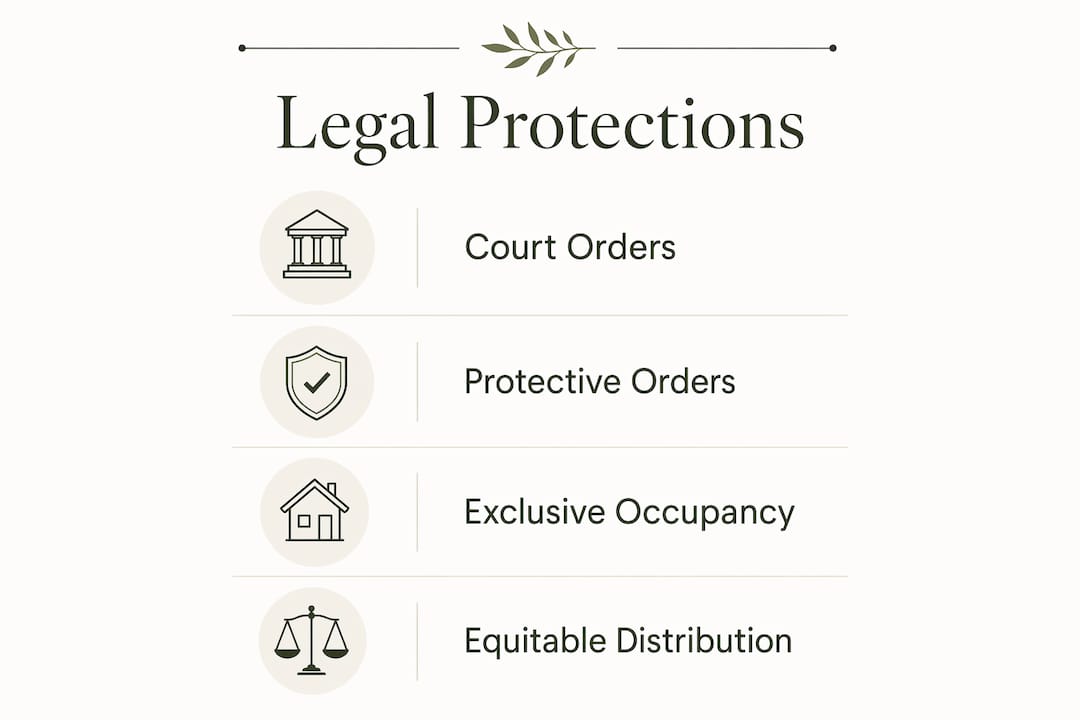
Courts in Utah take self-help eviction seriously. A spouse who attempts to force out the other without legal authority faces contempt of court, potential criminal charges, and serious damage to their standing in any pending divorce case. Judges notice when one party tries to gain an unfair advantage through intimidation rather than legal process.
The Utah Fit Premises Act reinforces this by requiring a strict legal sequence before any occupancy can be terminated. Failure to follow that sequence results in fines and criminal exposure. The law's intent is clear: no one loses their home without due process, and that protection extends to spouses.
"Protective orders should only be used to address genuine safety concerns and not as strategic tools in divorce or property disputes. Misuse can harm case credibility and outcomes in family court." — Gibblaw Firm
How do protective orders affect wife eviction rights in Utah?
A protective order is the most immediate legal tool that can require one spouse to vacate the marital home. Utah courts issue these orders in cases involving domestic violence, stalking, or credible threats of harm. The process moves fast by design because safety is the priority.

A judge can issue an ex parte protective order requiring a spouse to leave the home immediately, without the other spouse present at the hearing. "Ex parte" means the court acts on one party's sworn statement alone when the danger is urgent. The respondent then has an opportunity to contest the order at a follow-up hearing.
Violating a protective order carries serious consequences. Violations escalate from misdemeanor to felony for repeat offenses. Law enforcement can arrest a violating spouse on the spot, which means the order has real teeth from the moment it is issued.
Protective orders are not a permanent solution to property disputes, though. They do not resolve long-term property or custody issues, which require proper divorce proceedings. A protective order affects possession temporarily. It does not transfer the deed, divide assets, or settle who keeps the home after divorce.
Key facts about protective orders and marital home eviction in Utah:
- Courts issue them based on evidence of domestic violence or credible safety threats
- Ex parte orders can take effect the same day they are filed
- The respondent must vacate immediately upon service of the order
- Violations are criminal offenses, not just civil matters
- The order expires or is reviewed at a scheduled court hearing, typically within 20 days
Pro Tip: If you are seeking a protective order, bring documentation of incidents including police reports, medical records, text messages, and witness statements. Courts weigh evidence carefully, and specifics matter.
What is an exclusive occupancy order and how does it work?
An exclusive occupancy order is a family court ruling that grants one spouse the right to live in the marital home temporarily while divorce or separation proceedings are ongoing. This order restricts the other spouse's access but does not transfer ownership. The deed stays as it is until the divorce is finalized and property division is settled separately.
Courts grant these orders when living together has become genuinely unworkable. Common grounds include ongoing conflict that disrupts children's stability, documented harassment between spouses, or situations where shared occupancy creates safety concerns that fall short of the threshold for a protective order. The requesting spouse must present a factual basis. Courts do not grant exclusive occupancy lightly.
Here is how the process typically unfolds in Utah:
- One spouse files a motion for exclusive occupancy as part of divorce or separation proceedings.
- Both spouses are notified and given an opportunity to present their positions.
- The judge evaluates the living situation, the needs of any children, and the conduct of both parties.
- If granted, the order specifies who remains in the home and when the other spouse must vacate.
- Law enforcement can enforce the order if the departing spouse refuses to comply.
- Contempt proceedings apply if the excluded spouse returns without permission.
Exclusive occupancy orders do not alter deed ownership. Parties must settle property ownership separately through divorce proceedings or negotiated agreements. This distinction matters because some spouses mistakenly believe that being ordered out of the home means they lose their ownership stake. That is not how Utah law works.
Court enforcement of exclusive occupancy orders is a powerful remedy, but it requires strong factual evidence of unworkability or safety risks. Vague claims of tension or discomfort rarely satisfy the standard.
How does property division in Utah affect the marital home during divorce?
Utah follows equitable distribution, not community property rules. Courts divide marital assets fairly based on multiple factors, including the length of the marriage, each spouse's financial situation, and the needs of any children. "Equitable" does not mean equal. It means fair given the full picture.
The marital home is often the largest asset in a divorce, and courts have three main options for handling it. Understanding these options helps clarify why eviction and property division are separate legal questions.
| Option | What it means | When courts favor it |
|---|---|---|
| Sale of the home | Both spouses sell and split proceeds | Neither spouse can afford to buy out the other |
| One spouse keeps it | Buyout of the other's equity share | One spouse has the income to refinance alone |
| Temporary co-ownership | Both retain interest until a set date | Minor children need stability in the short term |
A judge may grant temporary exclusive possession of the home through temporary orders during divorce for stability or family needs. This is distinct from the final property ownership decision. Temporary orders keep the situation manageable while the case proceeds, but they do not predict the final outcome.
The custodial parent's needs carry significant weight in these decisions. When children are involved, courts prioritize minimizing disruption to their schooling, routines, and relationships. A parent who has been the primary caregiver often has a stronger claim to temporary occupancy, though this does not guarantee they will keep the home permanently.
Eviction, in the landlord-tenant sense, simply does not apply here. Property division is a separate legal track that runs alongside occupancy disputes during divorce. Resolving one does not automatically resolve the other.
Key Takeaways
A husband cannot evict his wife from the marital home in Utah without a court order, because spouses hold lawful occupancy rights regardless of whose name is on the deed.
| Point | Details |
|---|---|
| No unilateral removal | A husband cannot legally force his wife out without a court order, even if he owns the property. |
| Protective orders move fast | Ex parte orders can require a spouse to vacate the same day, but only in genuine safety situations. |
| Exclusive occupancy orders | Courts grant temporary home possession to one spouse during divorce without changing deed ownership. |
| Property division is separate | Who lives in the home temporarily is a different legal question from who ultimately owns it. |
| Self-help eviction backfires | Changing locks or cutting utilities without court approval can result in criminal charges and hurt your divorce case. |
What people get wrong about marital home eviction
Most people who come to me with this question have already made a mistake. They have either tried to force their spouse out without legal authority, or they have left the home voluntarily because they thought they had no choice. Both moves can seriously damage their position in court.
Leaving the marital home voluntarily, without a court order or written agreement, can be interpreted as abandonment. That perception affects property division arguments and sometimes custody evaluations. Staying in the home, even when the relationship is hostile, is often the legally safer choice until a court says otherwise.
The misuse of protective orders is the other major pitfall I see. Some people file for a protective order not because they face genuine danger, but because they want to gain quick possession of the home. Courts recognize this pattern. Judges who see a protective order filed alongside a divorce petition, with thin supporting evidence, treat it with skepticism. The consequences of a bad-faith filing include damaged credibility on every other issue in the case, from custody to asset division.
Legal professionals advise that court orders affecting occupancy are better negotiated than fought. A written agreement between spouses about who stays in the home, reviewed by attorneys, avoids the cost and unpredictability of litigation. It also tends to produce arrangements both parties can actually live with. Utah's family courts are busy, and judges appreciate parties who resolve what they can before the hearing.
If you are in a situation where living together is genuinely unsafe, get a protective order. If it is uncomfortable but not dangerous, pursue an exclusive occupancy order through the divorce process. Know the difference before you file anything.
— Landon
How Divvi can help you navigate marital home disputes
Figuring out your rights to the marital home during a separation is stressful enough without also wrestling with confusing paperwork and legal processes you have never encountered before.
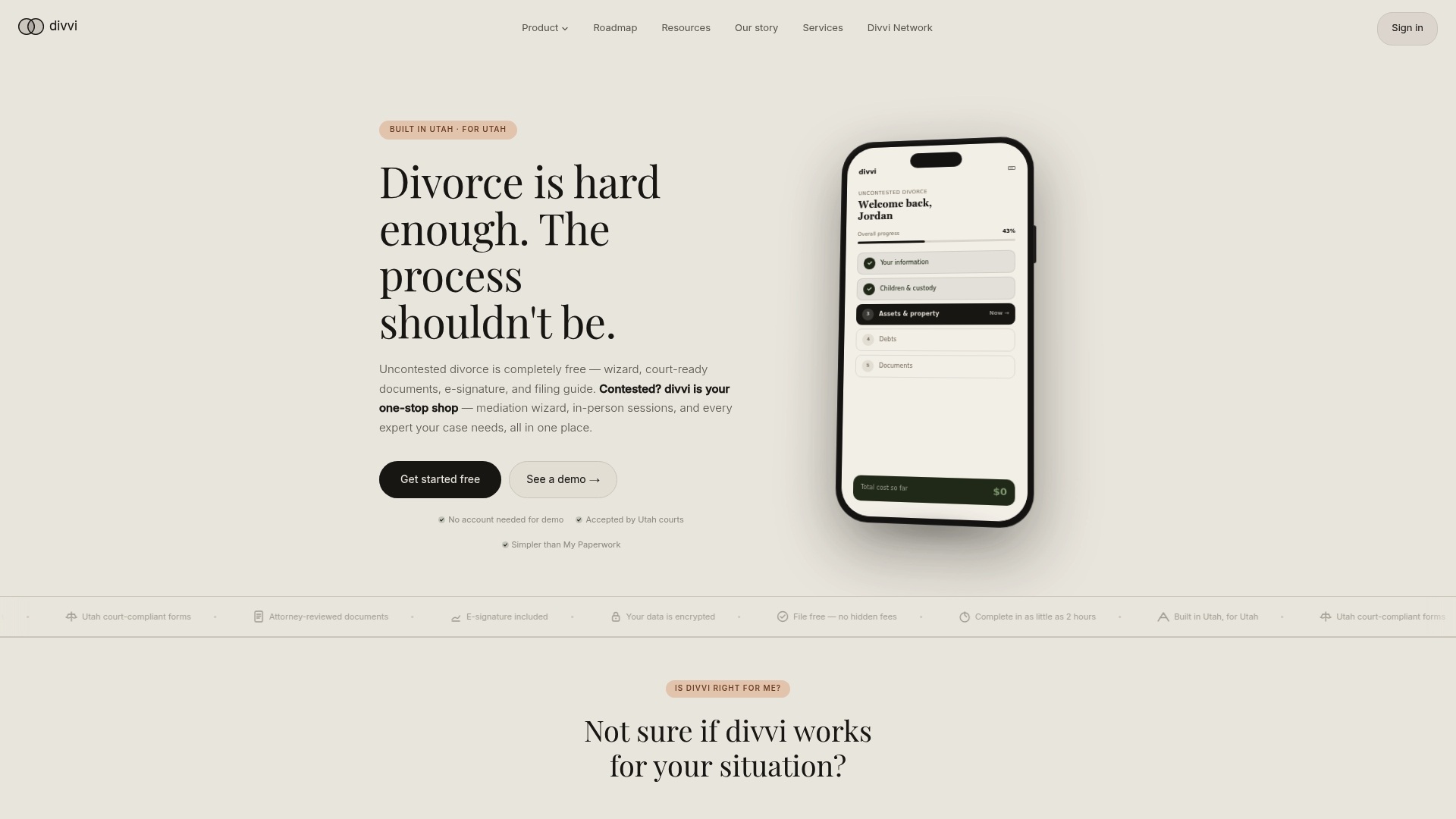
Divvi provides Utah families with a clear, step-by-step path through divorce, including property and occupancy issues. The platform generates divorce documents designed for filing and connects you with attorneys, mediators, and financial advisors based on what your specific situation requires. If your case involves a disputed home or an uncooperative spouse, Divvi handles contested cases and can connect you with mediation services to reach agreements without a courtroom fight. The base platform is free to use, and you pay only for the services you actually need.
FAQ
Can a husband legally evict his wife if the house is in his name only?
No. A wife retains lawful occupancy rights to the marital home even if she is not on the deed, and a husband must obtain a court order to affect her possession of the property.
What happens if a husband changes the locks to keep his wife out?
Changing the locks without a court order violates Utah law and can result in criminal charges. It also damages the husband's credibility in any ongoing divorce or custody proceedings.
How quickly can a protective order remove a spouse from the home?
A Utah court can issue an ex parte protective order the same day it is filed if there is evidence of immediate danger, requiring the respondent to vacate immediately upon being served.
Does an exclusive occupancy order mean the excluded spouse loses the home in the divorce?
No. Exclusive occupancy orders do not transfer ownership or affect the final property division. The deed and equity are settled separately through the divorce process.
Can I use a protective order to get my spouse out of the house during a divorce?
Protective orders are only appropriate when genuine safety concerns exist. Misusing them as divorce tactics can lead to judicial sanctions and negatively affect custody and property outcomes in your case.